How Building Inspection Costs Are Calculated in Sydney (2026 Breakdown)
The transparent 2026 formula behind every Sydney inspection quote.
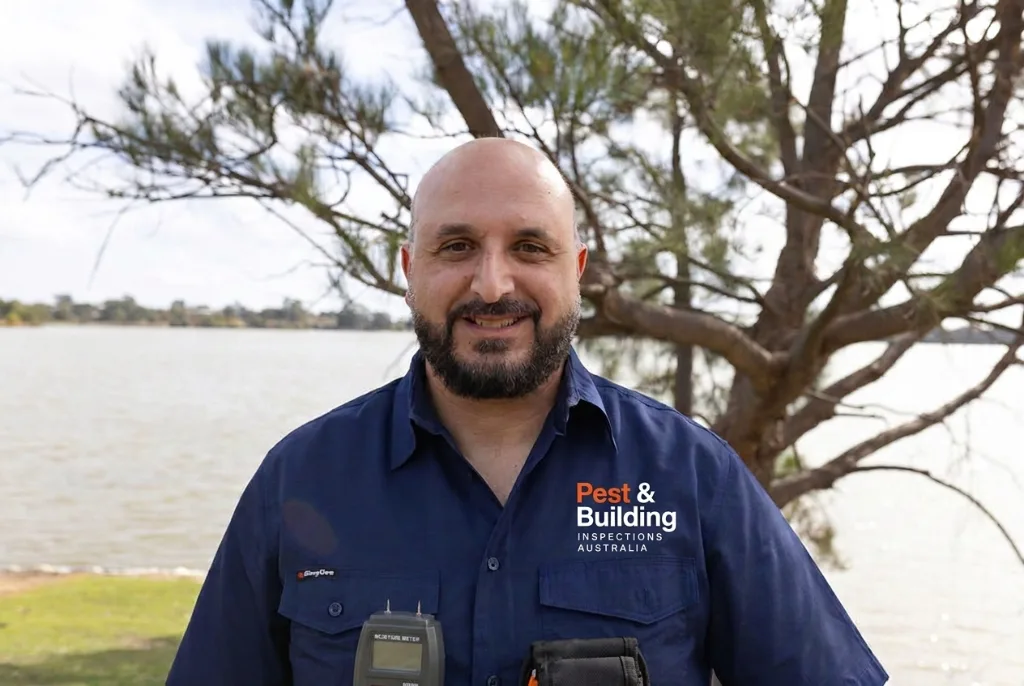 Written by Rod Ismail, Principal Building & Pest InspectorReviewed by Rod Ismail 11 min readPublished 20 July 2026 · Last verified 1 July 2026
Ask three Sydney inspectors for a quote on the same house and you'll get three different numbers — often $150 apart. That's not random. Behind every legitimate quote sits the same four-lever formula: property type, size band, access complexity and inspection scope. This guide breaks each lever down with 2026 Sydney numbers, shows you the exact per-lever loadings, and gives you a script for comparing quotes like-for-like. When you're done, you'll price your own address inside 60 seconds — and spot the two quote-inflation tactics that add $80–$140 for no extra work.
The four levers behind every Sydney inspection quote
Every legitimate Sydney building inspection quote in 2026 is built from four levers, in this order: property type, size band, access complexity, and inspection scope. A fifth soft lever — heritage or pre-1950s construction — sits on top of the base number as a documentation loading. Everything else you see on a quote (thermal imaging, moisture testing, roof void entry, sub-floor entry, written report, 48-hour delivery, phone debrief) belongs in the base scope and should not be charged as an extra. If a competitor lists those as line-item add-ons, you're not comparing like-for-like.
The reason this matters: Sydney inspection quotes across the same address commonly vary by $150–$220 depending on which of the four levers each inspector prices in and which they quietly exclude. Once you understand the formula, you can look at a $330 quote and a $525 quote on the same house and tell in 30 seconds which one is missing the sub-floor entry, which one skips thermal imaging, and which one is going to email you a two-page PDF instead of a 40-page report.
This guide walks each lever in turn with 2026 Sydney numbers. If you want the fully-priced result for your specific address without doing the maths yourself, our interactive cost calculator on the building inspection cost Sydney pillar page does it in about 15 seconds — property type, size, scope, heritage flag, regional flag, done.
Lever 1 — Property type (the base rate)
Property type sets the base rate before any modifiers apply. In Sydney 2026, the mainstream base rates for a compliant AS 4349.1 building-only inspection are: unit or apartment $300–$420; townhouse or villa $340–$480; standard 3–4 bedroom single-storey house $380–$520; large or double-storey house $460–$620; and acreage, heritage or 5+ bedroom homes $560–$780. Adding the pest scope (AS 4349.3) adds roughly $200–$440 depending on property type — smaller on units, larger on acreage.
The reason type is the biggest single lever is on-site time. A 2-bedroom unit takes 60–90 minutes to inspect properly. A standard house takes 2–3 hours. A large double-storey with pool and outbuildings takes 3–4 hours. Acreage or heritage properties routinely take 4+ hours because of sub-floor crawl distance, multiple outbuildings, and the need to document historic construction details for the report. Each additional hour on-site is a real cost the inspector is passing through — not a margin play.
For the combined building + pest package (the option 8 out of 10 pre-purchase buyers choose), Sydney 2026 base rates are: unit $450–$610; townhouse $490–$670; standard house $540–$715; large or double-storey $640–$850; acreage or heritage $780–$1,050. Combined bundles routinely run about 10% cheaper than booking building and pest separately because one inspector attends once, sets up equipment once, and produces one report.
Lever 2 — Size band (the multiplier)
On top of the base rate, most Sydney inspectors apply a size-band multiplier. The typical bands used across our own 2025–2026 Sydney bookings: under 150m² floor area sits at 0.92x the base rate; 150–250m² is the reference 1.0x; 250–400m² is 1.12x; and over 400m² is 1.25x. Land size is a secondary factor — a large block with a small house doesn't move the multiplier much because inspection time is driven by the built form, not the garden.
Where size gets tricky is on renovated or extended houses. A 1920s Federation cottage with a modern 60m² rear extension often gets quoted as if it were the original 110m² footprint — then the inspector arrives on-site, finds a 170m² total footprint, and either burns an unpaid hour or rushes the last third of the inspection. A good inspector asks you the actual current floor area (from the last council DA, contract of sale, or measured floor plan) before quoting, not just the number of bedrooms.
For units and apartments, size mostly moves the strata add-on rather than the base building inspection. A 50m² studio in the Sydney CBD and a 120m² 3-bed apartment in Chatswood have similar building inspection times (roof void is a strata common-property matter, sub-floor doesn't apply), but the larger apartment has more wet areas, more windows and more balcony waterproofing to check — so it prices $50–$80 higher on average.
Lever 3 — Access complexity (the hidden loading)
Access is the single most common reason two identical-looking Sydney quotes end up hundreds of dollars apart. The three access questions that actually move a quote: (1) is the roof void entered and photographed, or just observed from the manhole? (2) Is the sub-floor entered and photographed, or excluded because it's tight-access? (3) Are all external elevations walked, including any tight side-boundary passages between neighbouring buildings?
In Sydney's older housing stock — Inner West terraces, Eastern Suburbs semi-detached homes, Northern Beaches beach cottages — sub-floor access is routinely tight (crawl-height, sometimes belly-crawl). A compliant inspector still enters where safely possible and reports the sub-floor condition; a cheap operator excludes it and the quote drops $60–$100. That $60 saving is what stands between you and knowing whether the bearers under your $2M purchase are termite-damaged or bearing on wet, subsiding soil.
Ask each quoting inspector one question in writing: 'Are the sub-floor and roof void entered, photographed and reported as a standard-scope item, or excluded?' A yes-yes answer is the honest baseline. A no-no answer explains why the quote is 20% cheaper — and why it isn't the same product.
Lever 4 — Inspection scope (building only vs pest only vs combined)
The three canonical scopes: building-only to AS 4349.1 (structural, safety and defect report); pest-only to AS 4349.3 (termite, borer and fungal decay report with thermal + moisture testing); and combined building + pest, which is one on-site visit producing one bundled report against both standards. In 2026 Sydney pricing, adding the pest scope to an existing building inspection costs roughly $110–$165 more than building-only — significantly less than the $220–$385 pest-only price because the fixed set-up cost is already absorbed by the building visit.
There are also non-canonical scopes with their own pricing logic: strata physical inspection ($330–$495 add-on to a records report), Practical Completion / handover inspection ($495–$795), construction-stage inspections ($395–$595 per stage with bundled programs), dilapidation report ($395–$795+), and defect / expert-witness reports for disputes (charged hourly at $220–$320/hr with a minimum engagement fee). These aren't optional add-ons to a pre-purchase inspection — they're different products for different life-events.
Related on Pest & Building Inspections Australia

The two loadings that legitimately push the price up
Loading 1 — heritage or pre-1950s construction. Federation, Victorian terrace, Californian bungalow and Art Deco properties add $80–$165 to a standard quote in Sydney. The reasons are real: lath-and-plaster walls that need moisture testing without penetration; cast-iron drainage that requires targeted photography; restricted sub-floor access on stone footings; older wiring and ceiling roses that need documenting; and a higher base likelihood of undocumented previous works that need to be flagged for the buyer's solicitor. It's a documentation loading, not a margin loading — expect a longer report with more photos.
Loading 2 — regional NSW travel. Metro Sydney inspections don't attract travel loadings. Once you cross into Blue Mountains, Central Coast, Illawarra / Wollongong, Hunter or Southern Highlands, most inspectors add $55–$110 to cover the drive and vehicle time. If the property is 90+ minutes from the CBD one-way, the loading is typically $110–$165. Ask for the travel component to be shown as a separate line so you can see it clearly.
What should NOT appear as a line-item extra
The following belong inside the base scope in Sydney 2026, and any inspector who lists them as separate line-item extras is quietly inflating the invoice: writing the report; delivering the report within 48 hours; sending the report to your solicitor by email; a photo-rich format; using a moisture meter; using a thermal camera; entering the roof void where safely accessible; entering the sub-floor where safely accessible; a 10–15 minute phone debrief with the inspecting technician after report delivery; and re-sending the report if you lose the PDF.
Two extras that are legitimately chargeable: a physical re-inspection to verify agreed repair works (typically $220–$330), and a formal defect report or expert-witness statement for a dispute (charged at hourly professional rates). Both are separate products — they aren't 'the same inspection, gold tier'.
Comparing three quotes correctly in 5 minutes
Send each of three inspectors the same six-line brief: property address; number of bedrooms and storeys; approximate floor area; whether it has a pool, granny flat or dual garage; the standards you want them to inspect against (AS 4349.1 and AS 4349.3); and your cooling-off deadline. Ask each for a fixed price in writing plus their licence number, PI insurance policy limit, expected turnaround, and confirmation that sub-floor and roof void are included as standard.
The professional inspectors reply inside 60 minutes with a fixed price and every question answered. The volume operators reply with a price and a pushy booking link and skip half the questions. The franchise call-centres reply with a range and a promise that 'your local inspector will confirm the final price on-site' — which is where the $80–$140 inflation typically appears.
One extra question that quietly separates the honest quotes from the inflated ones: 'Will the person who attends the property also write the report and take the debrief call?' In a well-run Sydney inspection practice the answer is yes. In a subcontractor franchise model the inspector on-site is one person, the report is written from photos by someone else, and the debrief is handled by a sales agent — three hand-offs that add cost and lose context.
Price your address in 60 seconds
If you'd rather skip the arithmetic, our building inspection cost Sydney pillar page includes an interactive 2026 cost calculator — pick property type, size band, scope and any modifiers, and it returns your indicative fixed range instantly. It's the same formula we've walked through in this guide, live and clickable.
Every quote we send in Sydney is fixed, GST-inclusive, and confirmed in writing before you book. Same-day metro inspections are usually available when booked by 10am, with the written report delivered that evening. If you need a quote on a specific address today, use the calculator or send the six-line brief above — we'll come back with a fixed price and a booking slot inside the hour.
Pricing pillar
Price your Sydney inspection in 60 seconds
The full 2026 Sydney pricing guide — with an interactive cost calculator, transparent property-type price bands, and the exact scope included in every quote — lives on our pillar page.
Open the 2026 cost calculator →Cost cluster
How Sydney inspection costs are calculated
The four-lever formula behind every 2026 quote — with the loadings that legitimately move the price.
Cost cluster
What's included in a Sydney inspection
Every zone entered, every tool used — and the six items a below-market quote quietly excludes.
Cost cluster
How long a Sydney inspection takes
The four clocks running through cooling-off — on-site time, report turnaround, decision window.
Explore our core inspection services & Sydney regions
Jump straight to the pillar page that matches your situation — every guide, service and suburb page on Pest & Building Inspections Australia connects back to these.
CORE INSPECTION SERVICES
- Building inspection cost Sydney (2026 pricing)
Transparent 2026 price ranges + instant fixed-quote cost calculator.
- Combined building & pest inspections in Sydney
Structural + timber-pest in one visit, AS 4349.1 & 4349.3.
- Pre-purchase building inspections
Cooling-off ready reports — same day where possible.
- Termite & timber-pest inspections
Thermal + moisture-metered checks across every Sydney postcode.
- New-build & handover inspections
PCI, handover and staged inspections for new Sydney homes.
SYDNEY REGIONS WE COVER
POPULAR SUBURB INSPECTION PAGES
- Building Inspections Sydney CBDSydney Metro
- Building Inspections ParramattaWestern Sydney
- Building Inspections PenrithWestern Sydney
- Building Inspections LiverpoolWestern Sydney
- Building Inspections BlacktownWestern Sydney
- Building Inspections ChatswoodNorth Shore
- Building Inspections North SydneyNorth Shore
- Building Inspections BondiEastern Suburbs
- Building Inspections ManlyNorthern Beaches
- Building Inspections Castle HillHills District
- Building Inspections CronullaSutherland Shire
- Building Inspections CampbelltownWestern Sydney
Frequently asked questions
How quickly can you inspect a property in Sydney?+
In most cases we can attend within 24–48 hours of booking, with same-day inspections often available across Sydney metro when arranged by 10am.
Are you independent?+
Yes. Pest & Building Inspections Australia operates independently — our reports are evidence-based and written to give you a clear, impartial picture of the property so you can make a confident decision.
Do you follow Australian Standards?+
Every inspection is carried out to AS 4349.1 (building) and AS 4349.3 (timber pests). All inspectors are fully licensed, insured and carry $20M professional indemnity cover.
Get your 2026 fixed price in 60 seconds
Booking takes under a minute. Reports within 48 hours where possible.
Fixed price in 60 seconds · Reports within 48 hours · Fully independent