Termite Inspection Sydney: The Complete 2026 Guide
Why every Sydney home needs an annual termite inspection.
 Written by Rod Ismail, Principal Building & Pest InspectorReviewed by Rod Ismail 12 min readPublished 1 July 2026 · Last verified 1 July 2026
By the numbers
- $10,000+
- Average termite repair bill — not covered by home insurance
- Source: Insurance Council of Australia
- 12 months
- Recommended inspection interval in Sydney (AS 4349.3)
- Source: Standards Australia
Sydney sits inside one of Australia's most active subterranean termite zones. This is the full guide to how termite inspections work, what they cost, and the conducive conditions on your property you can fix this weekend to dramatically reduce risk.
Why Sydney is a high-risk termite city
Sydney sits inside one of the most active subterranean termite zones in Australia. The dominant species we see across the metro area is Coptotermes acinaciformis — an aggressive, colony-forming timber pest that will happily travel 50–80 metres from its nest to feed. Warm winters, high summer humidity along the coast, and decades of unmaintained landscaping mean colonies establish, mature and start doing structural damage without any obvious warning above the skirting boards.
Every suburb we inspect in has activity. Bushland-fringed pockets — the Hills District, the Northern Beaches ridgelines, Sutherland Shire's Royal National Park edge, and the western fringe near Cumberland Plain woodland — sit in the highest category. But we also find heavy activity in landscaped inner-west and eastern-suburbs blocks where mature gum trees, retained sleepers and old railway-tie garden edging have been quietly hosting colonies for a decade.
The Australian Standard AS 3660.2 formally categorises Sydney LGAs as high risk. That's not marketing — it is the reason NSW timber-framed homes are required to have a durable termite management system installed at construction, and it is the reason your building and pest inspection is not really optional on any timber-framed Sydney purchase.
What a proper termite inspection actually is
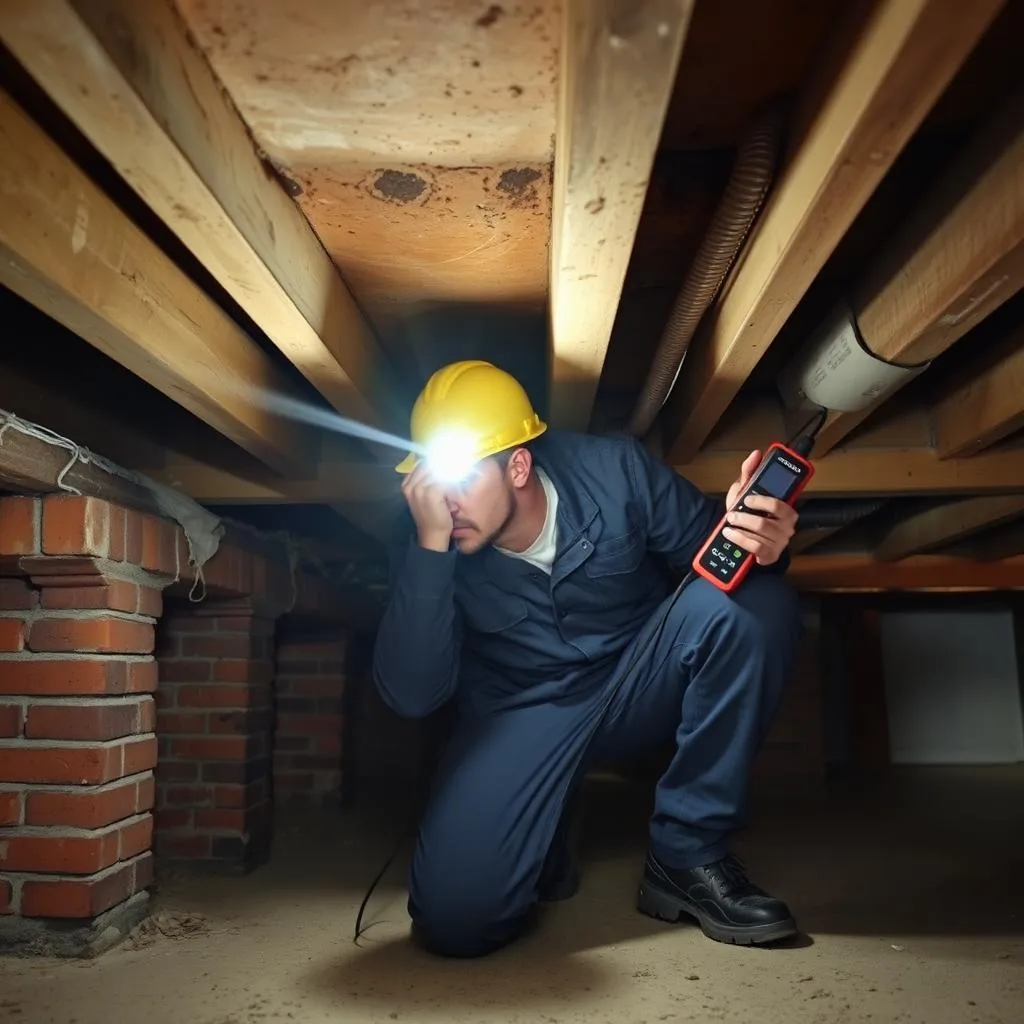
A compliant termite inspection is conducted to AS 4349.3 — 'Inspection of buildings — Timber pest inspections'. It is not a five-minute skirting-board tap. A real inspection takes 60–120 minutes on a standard house and covers the interior, roof void, sub-floor (where accessible), all external elevations, the yard within 30 metres of the structure, outbuildings, fencing, retaining walls and any timber stored on-ground.
The inspector is looking for three separate things at once: (1) active termites, (2) evidence of previous termite activity and damage, and (3) conditions that make the property likely to attract termites in the future — the 'conducive conditions' section of the report. Most of the actionable value in a good termite report sits in category three, because it is the part you can fix.
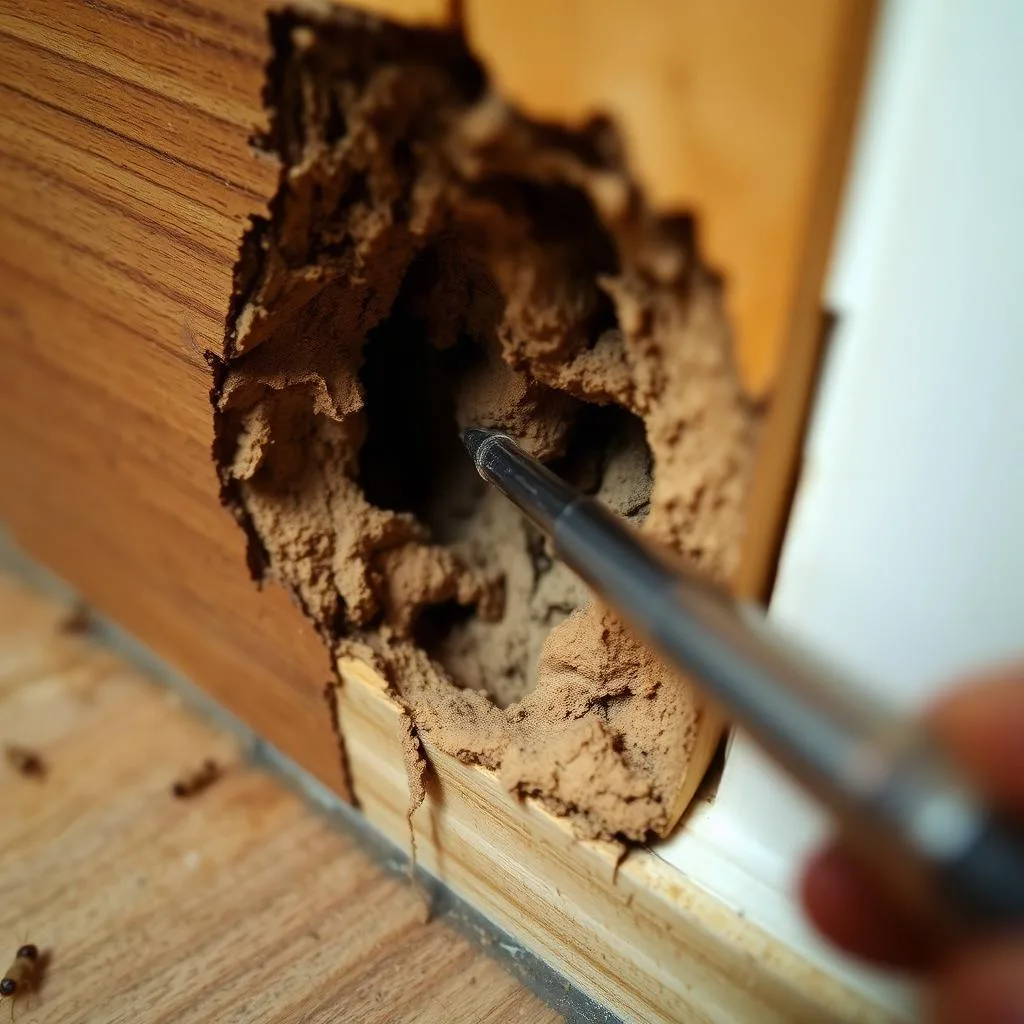
The tools of the job are simple: a strong torch, a moisture meter, a sounding tool (a small hammer, screwdriver handle or specialised sounder), a thermal-imaging camera and — increasingly common in Sydney — a Termatrac T3i microwave-radar device that detects termite movement inside a wall cavity without drilling. If the inspector arrives with none of these, you are not getting an AS 4349.3 inspection.
The seven places we find live termites
Sub-floor bearers and joists near wet areas. Bathrooms and laundries leak. Leaks wet the timber underneath. Wet timber attracts termites. This is the single most common live-activity location in Sydney pre-1990s brick-veneer and full-brick homes.
Sub-floor stumps in slope-block homes on the North Shore and Hills District. Timber stumps in ground contact are essentially a termite invitation. If the property still has original timber stumps, expect either damage, treatment history, or both.
Roof-void timbers above bathrooms and kitchens. Poor exhaust venting sends steam into the roof void, wetting rafters and battens. On older Federation and inter-war homes we regularly find mud tubes running along roof-void rafters and up into wall plates.
Skirting boards in ground-floor rooms adjacent to garden beds. Where the external ground level has been built up over years of landscaping and now sits above the damp-proof course, termites simply walk in above the barrier line.
Timber-framed decks, pergolas and stair stringers. These are the classic 'attached but not inspected' zones. Attached timber structures act as termite highways into the main house.
Sleeper-retaining walls and railway-tie garden edges within 5 metres of the building. Massive food source at ground level; once the colony matures it moves on to the house.
Stored timber and firewood stacked against a fence or wall. This is the number-one 'conducive condition' finding in almost every Sydney termite report we write.
What termite damage actually costs to repair
Cosmetic damage confined to a skirting board, an architrave or a single door frame: $400–$1,500. This is the 'lucky' scenario. Damage is limited to non-structural trim and the colony has been detected before it entered the wall frame.
Wall-frame damage — studs and noggins in a single room: $6,000–$18,000. This is the common Sydney scenario. Damage requires opening up the wall lining, replacing affected studs, treating the colony, re-lining and painting. Structural certification is usually required.
Sub-floor bearer and joist damage: $12,000–$45,000. Once bearers and joists are affected, floor levels start to move, doors stop closing, and the repair involves temporary propping, timber replacement, and often re-piering. This is where a $500 skipped inspection turns into a five-figure regret.
Roof-frame damage: $18,000–$60,000+. Rafters, top plates and truss chords are the most expensive termite repairs because the roof usually has to be lifted or sections removed to access the damage. On older Sydney homes with cathedral ceilings or exposed rafters this can rival a full roof replacement.
Chemical barriers, physical barriers and baiting — plain-English
A chemical soil treatment (Termidor, Altriset, Premise) is a liquid termiticide injected into a trench around the perimeter of the building. It creates an invisible zone termites cannot cross alive. Cost for a standard Sydney home: $2,200–$3,800. Typical warranted life: 8 years. This is the industry default for post-construction protection.
A physical barrier (Kordon, HomeGuard, Termimesh) is a stainless mesh or chemically-impregnated sheet installed under a new slab or around new penetrations at construction. You cannot retrofit a full physical barrier — it is only installed during the build. If you are buying a new home, check the barrier certificate is in the compliance documentation.
A baiting system (Sentricon, Exterra, Nemesis) is a set of in-ground stations around the property containing termite-attractive bait. Termites feed on the bait, take it back to the colony, and the colony collapses. Ongoing service cost: $350–$550/year. Best used where a full chemical treatment is impractical (heritage properties, some strata buildings).
If a property already has a barrier, ask for: the installer's tax invoice, the treatment plan, the warranty certificate, and the date of the last annual inspection. A barrier without an annual AS 4349.3 inspection every 12 months has effectively no warranty force behind it.
Related on Pest & Building Inspections Australia
The conducive-conditions checklist you can fix this weekend
Move stored timber, firewood, cardboard and old formwork away from the house. Anything in ground contact within 5 metres of the building is either a current or future termite food source.
Trim garden beds back below the weep-hole line on brick veneer. Weep holes are termite-inspection zones — they cannot inspect zones that are buried under mulch.
Fix leaks. All of them. Dripping taps, dripping air-conditioner condensate drains, leaking hot-water systems and blocked gutters that overflow against the wall are the single biggest driver of Sydney termite activity.
Re-direct downpipes. A downpipe discharging within 300mm of the slab edge saturates the soil right where the termite barrier is supposed to be doing its job.
Cut back tree branches that touch the roof. Branches are termite bridges.
Book an annual AS 4349.3 termite inspection. In Sydney, this is not paranoia — it is the professional recommendation. A $330 annual inspection is cheaper than one wall-frame repair by a factor of 30 to 100.
'The report said no active termites' — what that actually means
A negative live-activity finding on the day of inspection does not mean the property is termite-free. It means that at the moment the inspector attended, no live termites or fresh workings were visible in accessible areas. Colonies inside a wall cavity that hasn't been drilled and radar-scanned may not be visible. That is why the report also includes a conducive-conditions section and, almost always, a recommendation for annual re-inspection.
If the report notes 'evidence of previous termite activity — no live activity detected', treat that seriously. Something was there. Even if it has since been treated, the property has demonstrated it is attractive to termites, and the maintenance discipline needs to reflect that. Ask specifically for evidence of the treatment history: invoices, warranty, treatment plan.
If the report notes 'inaccessible areas', read them carefully. An inspection that could not access the sub-floor or the roof void, on a property with a history of moisture issues, is a materially weaker report. That is not the inspector's fault — but it is information you need before you commit to the purchase.
Cost of a Sydney termite inspection, and what you should get
Standalone AS 4349.3 termite / pest inspection on a standard Sydney home: $280–$380. Combined AS 4349.1 building + AS 4349.3 pest (the standard pre-purchase package): $450–$650. Annual termite re-inspection for an existing customer: $280–$330.
You should receive: a written report inside 24 hours; photos of every area inspected and every finding; a conducive-conditions section with specific remediation steps; explicit notes on inaccessible zones; the inspector's licence number; and a free 15-minute call to explain the findings in plain English.
You should not receive: a two-page tick-box PDF; a report authored by 'admin@' rather than the inspector who attended; a quote for treatment bundled with the inspection quote before any inspection has occurred; or any pressure at all to book treatment on the day of inspection.
Final word: treat termite risk as a management problem, not a moment-in-time question
The reason smart Sydney owners book an annual termite inspection is that termite risk is not a one-off yes/no question at the point of purchase. It is a continuous, low-probability, high-impact risk that changes over the life of the property as landscaping shifts, gutters age, downpipes settle and neighbouring blocks are re-developed. Treat it like insurance — because that is functionally what it is.
If you are buying now, get the AS 4349.1 + AS 4349.3 combined inspection before cooling-off ends. If you are already an owner, put a recurring calendar reminder in for a professional inspection every 12 months. That is the entire discipline. It is also the difference between the owners who never lose a dollar to termites and the owners who lose $40,000.
Explore our core inspection services & Sydney regions
Jump straight to the pillar page that matches your situation — every guide, service and suburb page on Pest & Building Inspections Australia connects back to these.
CORE INSPECTION SERVICES
- Building inspection cost Sydney (2026 pricing)
Transparent 2026 price ranges + instant fixed-quote cost calculator.
- Combined building & pest inspections in Sydney
Structural + timber-pest in one visit, AS 4349.1 & 4349.3.
- Pre-purchase building inspections
Cooling-off ready reports — same day where possible.
- Termite & timber-pest inspections
Thermal + moisture-metered checks across every Sydney postcode.
- New-build & handover inspections
PCI, handover and staged inspections for new Sydney homes.
SYDNEY REGIONS WE COVER
POPULAR SUBURB INSPECTION PAGES
- Building Inspections Sydney CBDSydney Metro
- Building Inspections ParramattaWestern Sydney
- Building Inspections PenrithWestern Sydney
- Building Inspections LiverpoolWestern Sydney
- Building Inspections BlacktownWestern Sydney
- Building Inspections ChatswoodNorth Shore
- Building Inspections North SydneyNorth Shore
- Building Inspections BondiEastern Suburbs
- Building Inspections ManlyNorthern Beaches
- Building Inspections Castle HillHills District
- Building Inspections CronullaSutherland Shire
- Building Inspections CampbelltownWestern Sydney
Frequently asked questions
How quickly can you inspect a property in Sydney?+
In most cases we can attend within 24–48 hours of booking, with same-day inspections often available across Sydney metro when arranged by 10am.
Are you independent?+
Yes. Pest & Building Inspections Australia operates independently — our reports are evidence-based and written to give you a clear, impartial picture of the property so you can make a confident decision.
Do you follow Australian Standards?+
Every inspection is carried out to AS 4349.1 (building) and AS 4349.3 (timber pests). All inspectors are fully licensed, insured and carry $20M professional indemnity cover.
Book your annual AS 4349.3 termite inspection
Booking takes under a minute. Reports within 48 hours where possible.
Fixed price in 60 seconds · Reports within 48 hours · Fully independent