Do I Need a Building Inspection? (Straight Answer for Sydney Buyers)
The short answer: yes — and here's exactly why.
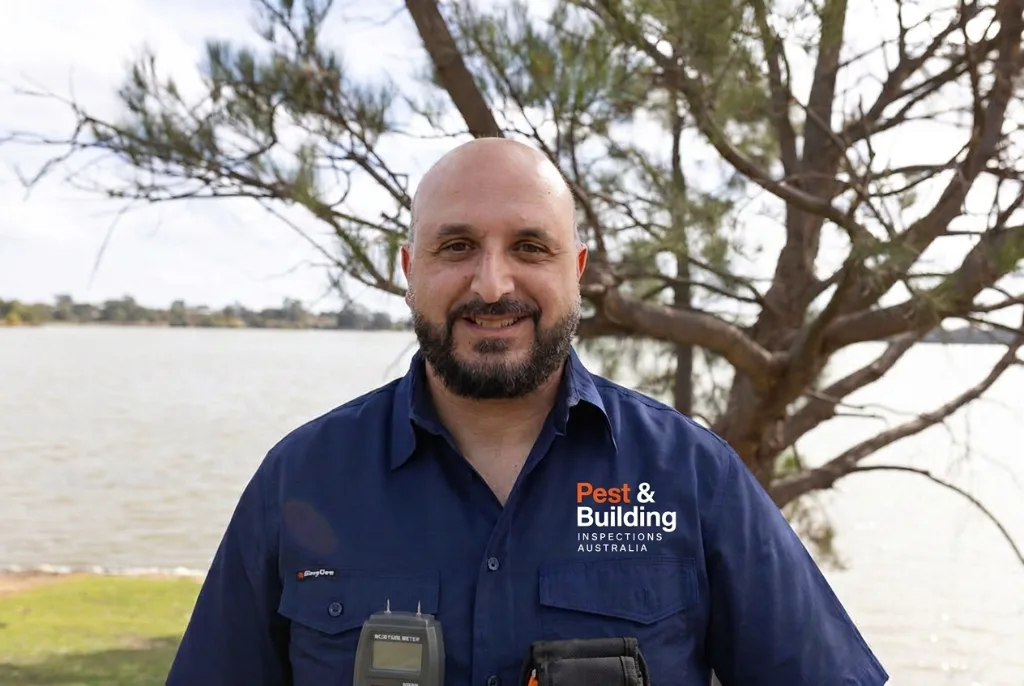 Written by Rod Ismail, Principal Building & Pest InspectorReviewed by Rod Ismail 9 min readPublished 1 July 2026 · Last verified 1 July 2026
If you're buying a residential property in Sydney, the answer is almost always yes — regardless of age, price point or whether the vendor already commissioned one. Here's the plain-English case, plus the four scenarios where an inspection is completely non-negotiable.
The short answer
Yes. If you are buying a residential property in Sydney and you cannot personally identify structural, moisture, roofing and timber-pest defects to a qualified standard, an independent building and pest inspection is not optional — it is the single cheapest form of financial insurance available in the entire purchase.
A $500 report that flags a $40,000 slab movement issue is not a $500 expense. It is a $39,500 saving. In more than a decade of Sydney inspections, we have never had a client tell us they regretted paying for a proper report. We regularly hear the opposite from buyers who tried to save the fee.
The four non-negotiable scenarios
(1) You are the buyer — always get your own inspection. A vendor-supplied report was commissioned by the seller. It is legally the seller's document, not yours, and it may be months old. It also may have been written to a scope that suited the vendor, not you.
(2) The property is over 20 years old — every additional decade compounds the risk of hidden termite, moisture and structural issues. A well-maintained 1990s home can be excellent; a poorly-maintained 1990s home can hide six-figure remediation. You cannot tell which from a Saturday open home.
(3) You're buying a renovation. Any property with visible renovation work has a higher chance of unapproved works, missing waterproofing, hidden electrical shortcuts and 'lipstick on a pig' cosmetic finishes over real defects. Recent renovation is a reason to inspect more thoroughly, not less.
(4) You're buying at auction. You waive cooling-off. That means the ONLY way to protect yourself is to inspect BEFORE you bid. A pre-auction building and pest inspection is standard practice in Sydney for serious bidders. Failing to do this is the single most common regret we hear from post-auction buyers.
What about apartments?
Apartments still need an inspection — often a combined internal building inspection PLUS a strata records inspection. The apartment's interior can have moisture and waterproofing defects that will become your problem the day you settle. The strata records show whether the whole building is heading into a major special levy for façade work, waterproofing rectification, fire safety upgrades or combustible cladding replacement.
The internal inspection tells you what you're buying today. The strata records tell you what you'll be paying for tomorrow. In a Sydney apartment purchase, skipping either one is a bigger risk than skipping the equivalent check on a house.
What about brand-new builds?
Especially new builds. Handover / PCI inspections routinely find 30–100+ defects on brand new Sydney homes. Once you make final payment and take possession, the leverage flips to the builder. Before final payment, defects are the builder's problem; after final payment, they are yours to chase through NSW Fair Trading or NCAT — and that is a slow, expensive road.
Independent stage inspections during the build (slab, frame, lock-up, fixing, PCI) are also increasingly common. They cost more in total than a single handover inspection, but they catch workmanship issues while the trades are still on-site and the defect is still cheap to fix. That is materially different from finding the same issue at handover, when it has been covered over.
The one case where you might skip it
You are a qualified builder, structural engineer or licensed inspector, and you have physically walked the property yourself with tools — moisture meter, torch, and access to the roof void and sub-floor. That's it. Every other scenario benefits from an independent second set of eyes.
And even in that scenario, many building professionals still hire an independent inspector for their own purchases, because their bias toward the property they're emotionally about to buy is exactly the bias the inspection is designed to remove. Third-party inspection is not just a technical service — it is a discipline against your own optimism.
But the property looked fine at the open home
Open homes are staged. Furniture covers cracks. Rugs cover soft floorboards. Fresh paint covers moisture stains. Air fresheners cover mould. The agent limits the time you have. You cannot access the roof void or sub-floor. You cannot lift bathroom access hatches. You cannot bring a moisture meter.
The purpose of a building inspection is precisely to see what an open home is designed to hide. If everything a professional inspector could find in 3 hours could also be found in a 20-minute open-home walk-through, the profession wouldn't exist.
Related on Pest & Building Inspections Australia
The vendor already provided a report — isn't that enough?
It is common in Sydney for vendors, particularly at auction, to provide a pre-listed building and pest report. Read it, but do not rely on it as your primary due diligence. The report is written for the vendor's benefit, not yours. It may be old. It may have a scope of work that omitted the exact areas most likely to hurt you. And critically, a vendor-commissioned inspector owes their professional duty to the vendor — not to you as a subsequent reader.
The industry norm is to commission your own report. If the vendor's report is genuinely comprehensive and recent, your inspector can review it as a supplementary document and focus their on-site time on areas the vendor's report qualified or excluded. That is often a smart use of the fee.
What happens if I skip it and I'm wrong?
Legally, in NSW, the doctrine is broadly 'buyer beware' for physical condition. Unless the vendor actively concealed a defect or misrepresented the property, the risk of hidden defects passes to you at settlement. There is no meaningful post-settlement remedy for finding termite damage in the sub-floor a week after you move in. It is now your termite damage.
That is the entire commercial logic of an inspection. You pay $500 to move the risk of a five- or six-figure defect from your side of the settlement ledger to the vendor's. There are very few opportunities in a property purchase to shift risk that dramatically for that little.
When to book the inspection
For private-treaty purchases in Sydney, book the inspection the day your offer is accepted and cooling-off begins. Cooling-off is typically five business days; a good inspector can attend within 24–48 hours and turn the report around within another 24, giving you time to review, take the debrief call, and either renegotiate, walk away or proceed.
For auction purchases, book the inspection the week before auction. Yes, you may pay for an inspection on a property you don't win. That is the cost of bidding responsibly, and it is dramatically cheaper than winning an auction on a property with hidden defects.
The final word
The question is not really 'do I need a building inspection'. It is 'am I willing to accept a five- or six-figure downside risk on the largest purchase of my life to save $500'. Almost nobody, when asked that way, answers yes.
Book the inspection. Read the report. Take the debrief call. Then make your call on the property with the actual information in front of you.
Explore our core inspection services & Sydney regions
Jump straight to the pillar page that matches your situation — every guide, service and suburb page on Pest & Building Inspections Australia connects back to these.
CORE INSPECTION SERVICES
- Building inspection cost Sydney (2026 pricing)
Transparent 2026 price ranges + instant fixed-quote cost calculator.
- Combined building & pest inspections in Sydney
Structural + timber-pest in one visit, AS 4349.1 & 4349.3.
- Pre-purchase building inspections
Cooling-off ready reports — same day where possible.
- Termite & timber-pest inspections
Thermal + moisture-metered checks across every Sydney postcode.
- New-build & handover inspections
PCI, handover and staged inspections for new Sydney homes.
SYDNEY REGIONS WE COVER
POPULAR SUBURB INSPECTION PAGES
- Building Inspections Sydney CBDSydney Metro
- Building Inspections ParramattaWestern Sydney
- Building Inspections PenrithWestern Sydney
- Building Inspections LiverpoolWestern Sydney
- Building Inspections BlacktownWestern Sydney
- Building Inspections ChatswoodNorth Shore
- Building Inspections North SydneyNorth Shore
- Building Inspections BondiEastern Suburbs
- Building Inspections ManlyNorthern Beaches
- Building Inspections Castle HillHills District
- Building Inspections CronullaSutherland Shire
- Building Inspections CampbelltownWestern Sydney
Frequently asked questions
How quickly can you inspect a property in Sydney?+
In most cases we can attend within 24–48 hours of booking, with same-day inspections often available across Sydney metro when arranged by 10am.
Are you independent?+
Yes. Pest & Building Inspections Australia operates independently — our reports are evidence-based and written to give you a clear, impartial picture of the property so you can make a confident decision.
Do you follow Australian Standards?+
Every inspection is carried out to AS 4349.1 (building) and AS 4349.3 (timber pests). All inspectors are fully licensed, insured and carry $20M professional indemnity cover.
Book your pre-purchase inspection today
Booking takes under a minute. Reports within 48 hours where possible.
Fixed price in 60 seconds · Reports within 48 hours · Fully independent