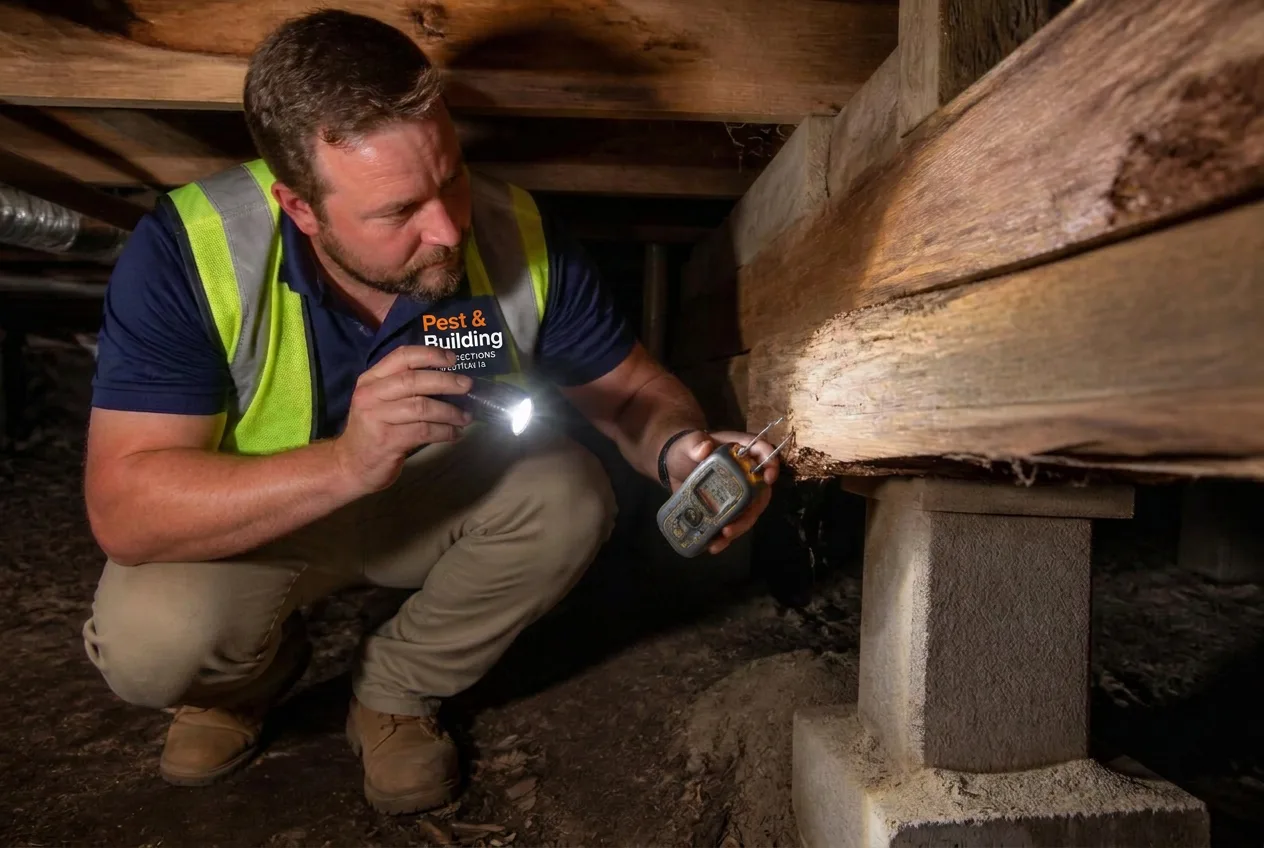
Reading the load path: how a structural inspection works
Every residential structure transfers load from roof to walls to floors to footings and into the ground. When a crack appears, the question is not just ‘where’ but ‘why in this location’ — a diagonal crack in a masonry wall means something very different from a horizontal one, and both mean something different from a stepped crack at a window head.
Our structural inspection reads the whole load path, correlating crack patterns with foundation type, soil class, roof loads and any recent works. That's how we identify whether you're looking at seasonal reactive-soil movement, footing failure, structural overload, or something else entirely.