Strata Report Guide: What Sydney Apartment Buyers Actually Need to Check
A great apartment inside a broken strata is a disaster you'll fund for years.
 Written by Rod Ismail, Principal Building & Pest InspectorReviewed by Rod Ismail 12 min readPublished 1 July 2026 · Last verified 1 July 2026
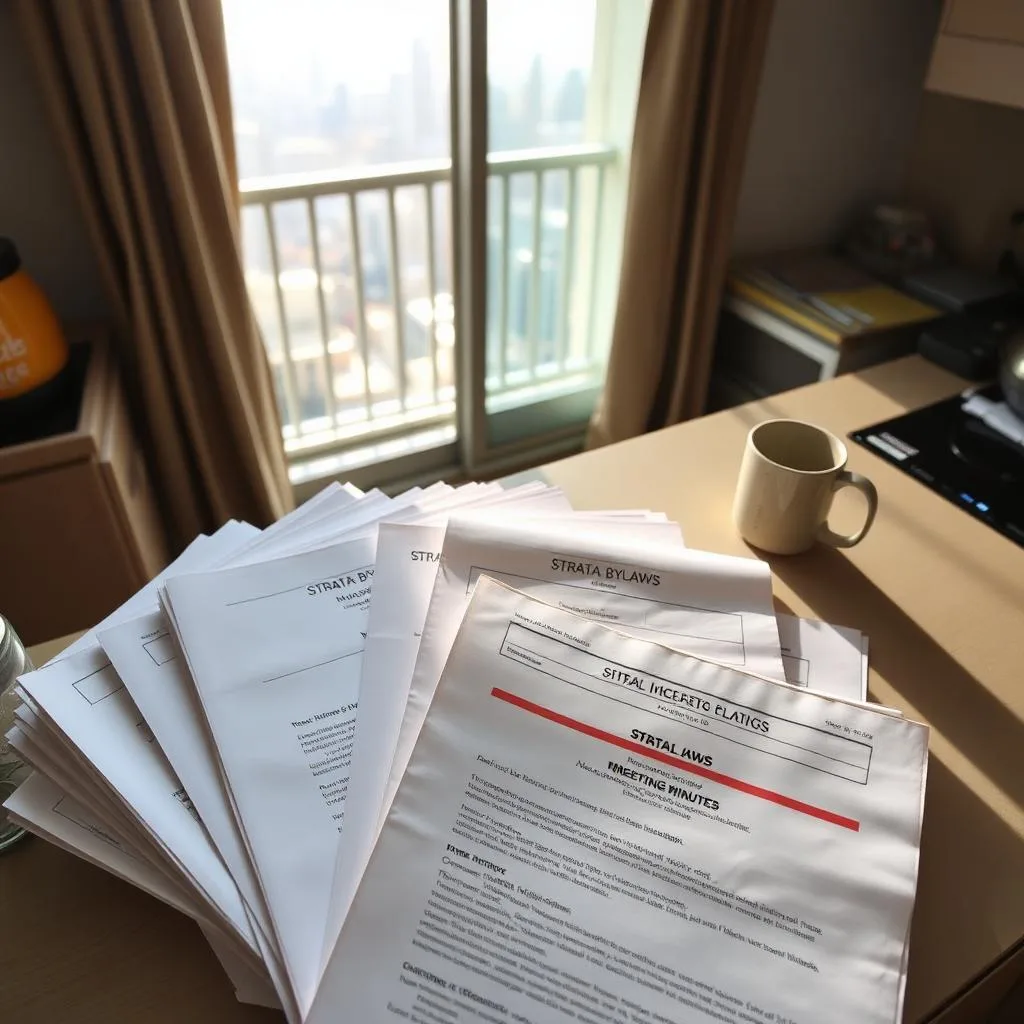
When you buy a Sydney apartment you should commission two separate reports — the physical building inspection and the strata records inspection. Together they give you the complete picture. This guide walks exactly what a good strata report flags.
Two reports, two purposes
When you buy a strata-titled apartment, townhouse or villa in Sydney, you should commission two separate reports: a physical building and pest inspection of the individual unit, and a strata records inspection of the owners corporation records. They are different products, produced by different specialists, and both are necessary.
The building inspection covers the physical condition of the lot you are buying — the interior finishes, wet areas, windows, balcony, and any common-property elements immediately adjacent. The strata report covers the financial, legal and administrative health of the entire owners corporation — the money in the bank, the levies coming due, the disputes on the docket, the maintenance backlog, and the special levies about to be struck.
A cheap-looking apartment with a well-run strata is a good buy. A well-presented apartment inside a broken strata is a disaster you will fund for years. The two reports together give you the complete picture.
What a strata records inspection actually reads
Under the Strata Schemes Management Act 2015 (NSW), an owners corporation must maintain a defined set of records. These include: the strata roll, meeting minutes for the last 2+ years, financial statements, insurance certificates, capital works fund (formerly sinking fund) plan, correspondence, contracts with building managers and caretakers, WHS records, fire safety statements, and any pending legal or NCAT matters.
A strata inspector attends the strata manager's office (or, increasingly, accesses the records digitally), reviews the full set, and produces a report summarising the material findings for a prospective buyer. The report is prepared under Schedule 3 of the Act and is standard, well-understood, and — critically — comprehensive.
The 12 things a good strata report will flag
1. Levy history and forecasts. Are quarterly levies going up? By how much? Are there special levies pending? A property with an $8,000 special levy about to be struck is a very different purchase from what the listing implies.
2. Capital works fund balance. This is the sinking fund that pays for major long-term repairs (painting, waterproofing, lift replacement, roof replacement). A healthy Sydney scheme carries $2,000-$8,000+ per lot in the capital works fund. Below $1,500 per lot is a red flag.
3. Insurance currency and adequacy. Strata insurance must cover full reinstatement value, public liability, catastrophe, and machinery breakdown. Under-insured buildings become owner-funded rebuild sites.
4. Fire safety compliance. Annual Fire Safety Statement (AFSS) currency, essential safety measures maintenance, sprinkler and detector testing records.
5. Waterproofing history and defects. Sydney strata buildings — especially 2000-2015 construction — routinely have building-wide waterproofing failures resulting in seven-figure remediation programs. Read this section carefully.
6. Cladding compliance. Post-Grenfell, NSW mandated combustible cladding audits. Buildings still under remediation carry substantial cost and, in some cases, lender restriction.
7. Building manager / caretaker contracts. Long, favourable-to-the-caretaker contracts (10+ years, above-market rates) are a red flag and a well-known Sydney scam pattern.
8. Litigation and disputes. Current NCAT matters, defect proceedings against original builders (positive for buyers if underway), owner disputes.
9. By-laws. Pet by-laws, short-stay letting by-laws, renovation by-laws, and any special or exclusive-use by-laws attaching to the lot you are buying.
10. AGM and EGM voting patterns. A committee that consistently votes against maintenance spending is a committee that has already priced you into the future backlog.
11. Building age and cyclical maintenance. Concrete cancer, spalling, painting cycles, lift replacement age.
12. Any 'section 184' certificate issues — the statutory certificate summarising unpaid levies against the lot.
The three financial signals that decide the buy
Signal 1: Capital Works Fund balance. Divide the fund balance by the number of lots. Under $1,500/lot is weak. $1,500-$4,000 is adequate. $4,000-$8,000 is healthy. Over $8,000 per lot in a mature building is well-managed.
Signal 2: Special levies in the last 3 years. One planned special levy is normal (roof replacement, lift refurbishment). Multiple unplanned special levies signal a scheme running its maintenance reactively out of owners' pockets rather than out of the fund.
Signal 3: The 10-year capital works plan. Under the Act, every scheme must have a 10-year forward plan. Read it. It will tell you exactly what is due for replacement in the next decade — and therefore roughly what your levies will need to fund.
Red flags that should stop the purchase
Active concrete-cancer or spalling repair program with no confirmed funding source. Multi-million dollar remediation programs get funded either by special levies (immediate hit to you) or by strata loans (higher levies for 10 years). Either way, you are paying.
Non-compliant combustible cladding still on the building. Some lenders will not lend against these buildings. Even where lending is available, the remediation program is a substantial cost yet to hit levy bills.
Waterproofing defect proceedings against the original builder still unresolved, especially where the builder has entered liquidation. If the builder is gone, the owners corporation self-funds the remediation.
Consistently over-budget financial statements. Actual costs materially exceeding budget in multiple years indicates poor financial management and/or hidden defects being paid for out of admin fund.
A caretaker contract with 15+ years remaining at above-market rates. Unwinding these contracts costs the scheme hundreds of thousands.
Litigation between the committee and lot owners. Wherever there is dysfunction on the committee, there is future cost.
The physical inspection of the lot itself
Even the best-managed strata scheme cannot control the condition of the specific unit you are buying. Kitchens, bathrooms, flooring, paint, windows, balcony finishes and internal doors are the owner's responsibility — and the physical inspection is what tells you what shape they are in.
In Sydney apartments, the highest-frequency findings are: shower waterproofing failure (30% of pre-2010 apartments), balcony waterproofing failure and cracking (very common in 2000-2015 concrete buildings), window seal failure, kitchen splashback silicone failure, and worn-out kitchen appliances that will need replacement inside 5 years.
Combined cost for a strata records inspection + physical unit inspection in Sydney: $550-$780. This is 0.05% of the average Sydney apartment purchase price and returns 10-40x in avoided special levies and negotiated price reductions.
Related on Pest & Building Inspections Australia
Buying off-the-plan — an entirely different exercise
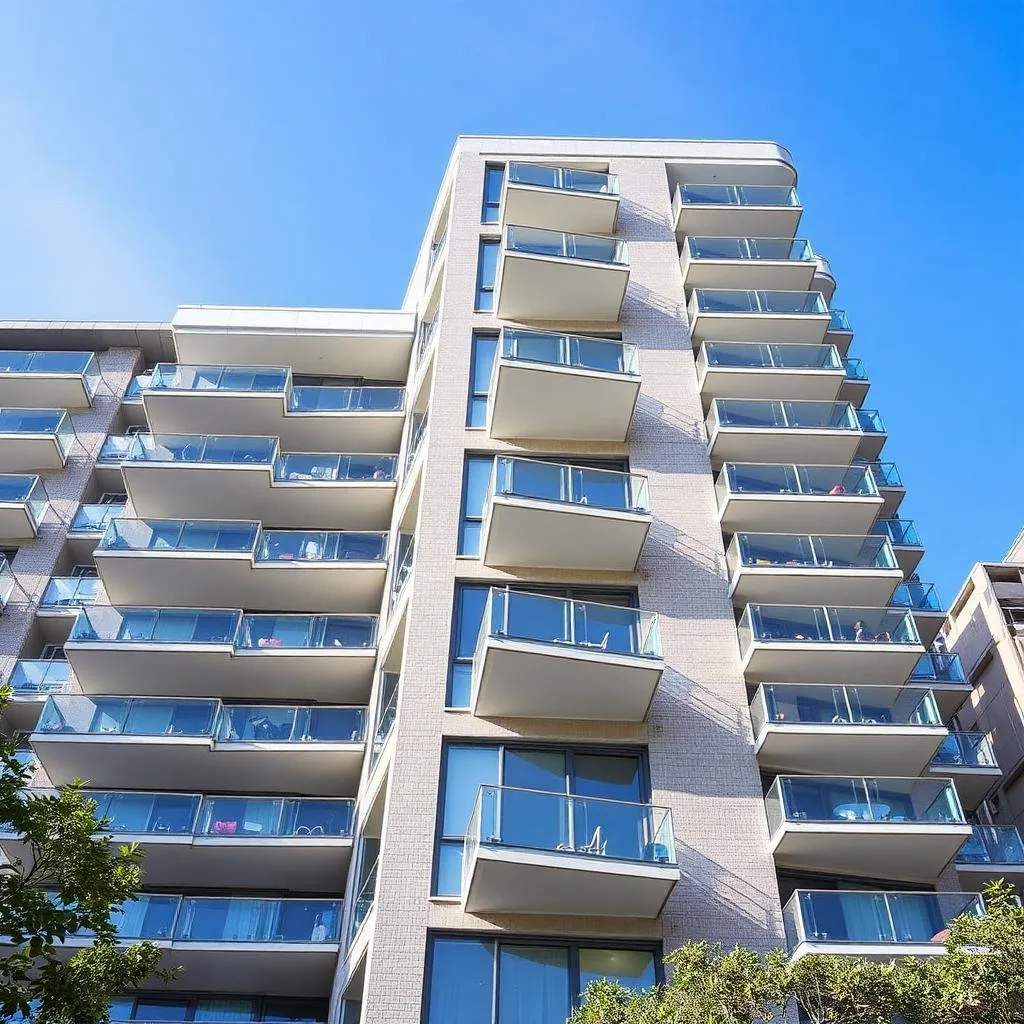
Off-the-plan apartment purchases do not have a functioning owners corporation yet, so there is no strata records inspection to conduct at the point of contract. The buyer's due diligence is instead on the disclosure statement, the proposed by-laws, the initial capital works forecast, and — critically — the builder's track record.
The single highest-value due-diligence action on an off-the-plan purchase is to look up the builder's history in NSW Fair Trading records, NCAT decisions, and — where the builder is a corporate group — recent liquidations of related entities. A significant proportion of the worst Sydney strata defect disasters can be traced back to builders whose track record was publicly available before the buyers exchanged.
Turning the strata report into a negotiation
Levy special-levy exposure and material capital-works funding gaps are legitimate price-adjustment levers, exactly like physical defects. Your solicitor can incorporate the strata report findings into a written negotiation position: 'Buyer offers $X, adjusted down by $8,000 to reflect the pending special levy documented in strata records.'
In our experience, vendors of individual strata lots have less control over these levers than vendors of freestanding houses — they cannot fix the building's cladding remediation program before settlement. But they can adjust the price. Where the strata report is specific and documented, adjustments of $3,000-$25,000 are routinely accepted in the current Sydney market.
The one 'silent' issue nobody talks about
Insurance excess. Modern Sydney strata insurance policies increasingly carry very large water-damage excesses ($20,000-$50,000 per event). Where a claim arises from an act, omission or unattended appliance in an individual lot (a leaking washing machine hose, a shower waterproofing failure the owner ignored), the excess can be charged back to the lot owner rather than paid from the strata insurance.
Ask specifically what the water-damage excess is on the strata policy, and ask whether recent claims have been charged back to lot owners. This is a small line in the strata report that periodically produces $30,000 surprises for new owners.
Final word
A Sydney apartment purchase without a strata records inspection is functionally the same as an auction purchase without a building inspection — you are buying an unquantified financial liability. Every experienced Sydney apartment buyer commissions the strata report. Every inexperienced buyer who has ever received a $12,000 special levy invoice in their first year of ownership subsequently commissions the strata report on their next purchase.
Skip the tuition. Commission both reports. Read them both. Then decide.
Explore our core inspection services & Sydney regions
Jump straight to the pillar page that matches your situation — every guide, service and suburb page on Pest & Building Inspections Australia connects back to these.
CORE INSPECTION SERVICES
- Building inspection cost Sydney (2026 pricing)
Transparent 2026 price ranges + instant fixed-quote cost calculator.
- Combined building & pest inspections in Sydney
Structural + timber-pest in one visit, AS 4349.1 & 4349.3.
- Pre-purchase building inspections
Cooling-off ready reports — same day where possible.
- Termite & timber-pest inspections
Thermal + moisture-metered checks across every Sydney postcode.
- New-build & handover inspections
PCI, handover and staged inspections for new Sydney homes.
SYDNEY REGIONS WE COVER
POPULAR SUBURB INSPECTION PAGES
- Building Inspections Sydney CBDSydney Metro
- Building Inspections ParramattaWestern Sydney
- Building Inspections PenrithWestern Sydney
- Building Inspections LiverpoolWestern Sydney
- Building Inspections BlacktownWestern Sydney
- Building Inspections ChatswoodNorth Shore
- Building Inspections North SydneyNorth Shore
- Building Inspections BondiEastern Suburbs
- Building Inspections ManlyNorthern Beaches
- Building Inspections Castle HillHills District
- Building Inspections CronullaSutherland Shire
- Building Inspections CampbelltownWestern Sydney
Frequently asked questions
How quickly can you inspect a property in Sydney?+
In most cases we can attend within 24–48 hours of booking, with same-day inspections often available across Sydney metro when arranged by 10am.
Are you independent?+
Yes. Pest & Building Inspections Australia operates independently — our reports are evidence-based and written to give you a clear, impartial picture of the property so you can make a confident decision.
Do you follow Australian Standards?+
Every inspection is carried out to AS 4349.1 (building) and AS 4349.3 (timber pests). All inspectors are fully licensed, insured and carry $20M professional indemnity cover.
Book your combined apartment inspection + strata report
Booking takes under a minute. Reports within 48 hours where possible.
Fixed price in 60 seconds · Reports within 48 hours · Fully independent