What We Find in Sydney Roof Voids (and Why It Matters)
The single test that separates a real inspection from a cheap one.
 Written by Rod Ismail, Principal Building & Pest InspectorReviewed by Rod Ismail 10 min readPublished 1 July 2026 · Last verified 1 July 2026
A proper AS 4349.1 inspection includes physical entry to the roof void with a torch, moisture meter and thermal camera. On a standard Sydney home this produces 4–10 findings. Here's what we look for and why the roof void matters more than any other zone.
The most defect-rich square metre in the house
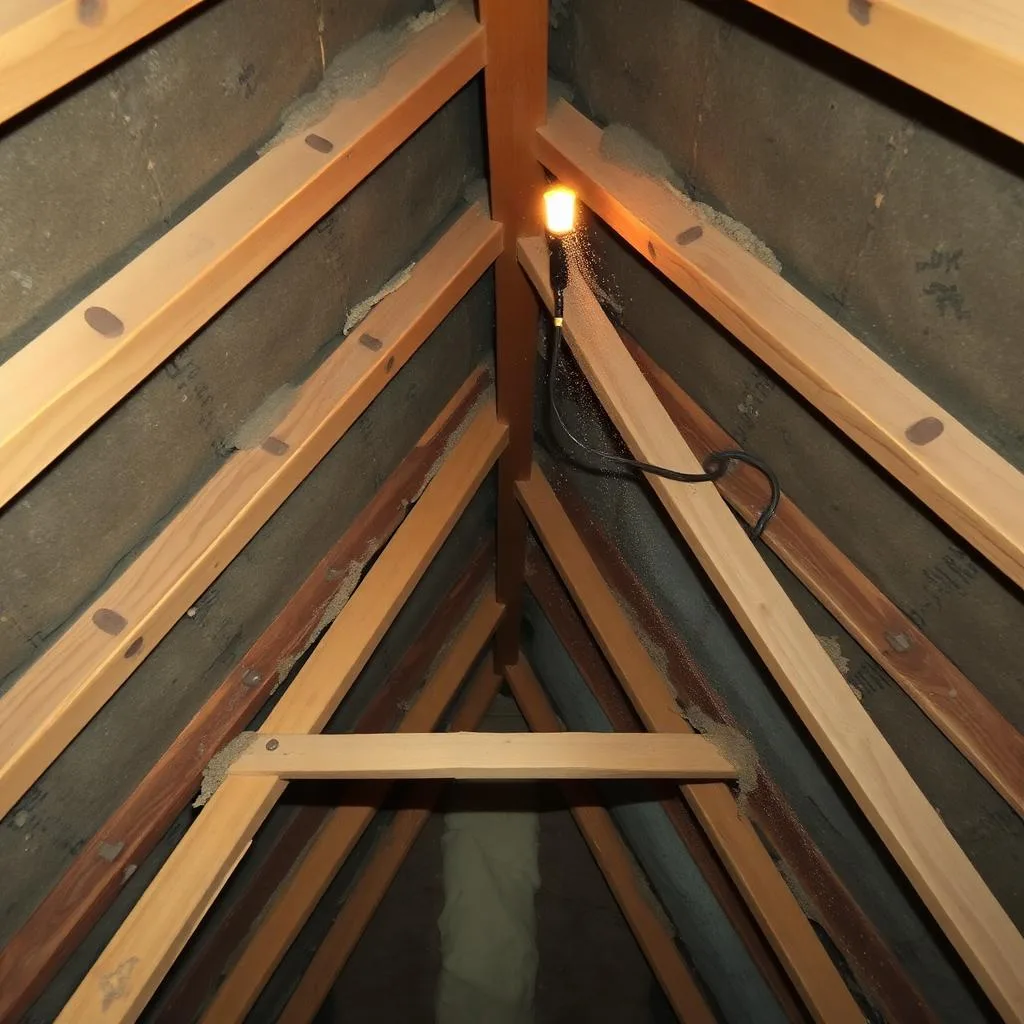
The roof void is where the highest concentration of costly, invisible-to-the-buyer defects lives. Termites, moisture, framing errors, insulation shortcuts, electrical non-compliance, and the earliest signs of roof failure all present in the roof void before they show up anywhere else in the house. It is also the zone most commonly under-inspected in a rushed or cheap inspection.
A proper AS 4349.1 inspection includes physical entry to the roof void where safely accessible, with a torch, a moisture meter, a thermal camera, and enough time to walk from one end of the ceiling framing to the other. On a standard Sydney home this is 15-30 minutes of inspection time and typically generates 4-10 findings.
Termites and pest activity
Roof-void termite activity in Sydney concentrates in three specific zones: rafters and battens directly above bathrooms, ceiling joists above kitchens, and top plates adjacent to leaking gutters. In every case, the pattern is the same: a chronic moisture source keeps the timber wet, and the moist timber attracts termites.
The evidence trail: mud tubes running along rafters or up through top plates, hollow-sounding timber, fresh frass (termite droppings) on the ceiling below, and — the diagnostic finding — a specific rafter or joist that reads dramatically higher moisture content than its neighbours. Ninety percent of the time, that specific member is the entry point.
Sarking and roofing membrane
Modern Sydney roofs use a sarking membrane (reflective foil or breathable membrane) between the roof battens and the ceiling framing. Sarking is a secondary weather barrier: if a tile lifts or a metal fastener leaks, the sarking is meant to redirect water down the roof to the gutter before it enters the ceiling.
Common findings: sarking sagging into the roof void from age or heat degradation, sarking with holes or tears from later air-conditioner installation, sarking that was never installed (pre-2000 builds), and sarking that has been overlapped in the wrong direction (water tracking underneath instead of over the join). Any of these turns a small roof leak into a ceiling-collapse event during a big Sydney storm.
Framing errors that live for decades
Timber-truss roofs on volume project homes routinely have small framing defects — a missing anchor at a rafter-to-top-plate connection, a cut or notched truss chord, a hanger nail placed incorrectly. These are catch-and-fix items during the frame stage inspection and become long-life defects if missed.
The one truly serious finding is a truss cut by an electrician or plumber to run a cable or pipe. Cutting the bottom or top chord of a manufactured truss is a genuine structural defect. If we find it during a pre-purchase inspection, it becomes a mandatory structural-engineer follow-up before the buyer proceeds.
Insulation — thermal and electrical
Ceiling insulation batts installed poorly (gaps at wall plates, folded and compressed at ceiling penetrations, missing over ~20% of the ceiling area) is a very common Sydney finding, especially on 2000-2015 project builds. The immediate consequence is higher summer cooling and winter heating cost. The longer-term consequence is condensation on the ceiling in winter, driving ceiling paint failure and mould.
More seriously: ceiling downlights installed with insulation batts pressed directly against the fitting, in contravention of AS 3999. This is a genuine fire risk. Retrofit downlight covers cost $12-$25 per downlight installed by an electrician, and the safety upgrade is worth it.
Electrical
Pre-2000 Sydney roof voids frequently contain retired electrical circuits still live at one end (extension work where the old circuit was never fully disconnected), junction boxes buried under insulation (illegal — must be accessible under AS/NZS 3000), and rubber-insulated cabling that has become brittle and is now shedding insulation.
In extreme cases we find live cable ends terminated with only insulation tape (not compliant), and cabling run alongside water pipes in ways that risk chafing over time. Any of these findings triggers a licensed electrician recommendation in the report.
Related on Pest & Building Inspections Australia

Water damage evidence
Historical roof leaks leave signatures the inspector reads: tannin staining on rafters, salt lines on brick chimney flashings, rust marks on old fasteners, and the specific pattern of moisture bloom on ceiling joists where water has puddled and then dried repeatedly. Even where the current roof appears watertight, the historical stains tell you the roof has a history of leaking — which usually means the underlying flashing detail is imperfect.
This becomes actionable when: the historical staining is recent (fresh water lines on rusted flashings), the roof material is at end-of-life age, or there is a specific flashing detail (skylight, chimney, valley) that has clearly been the source. In each case, the report specifies the location for a follow-up quote from a licensed roofer.
Ventilation
Sydney roof voids need positive ventilation to prevent moisture accumulation. Standard approaches: whirlybirds (wind-driven turbines), fixed ridge vents, gable-end vents, and — increasingly — powered roof-void extract fans on humidity- or temperature-controlled switches.
Roof voids with no functional ventilation, or ventilation blocked by insulation batts pressed against the vent, run hot in summer (accelerating ceiling paint and lining failure) and moist in winter (driving condensation on the underside of the roof material). The fix is inexpensive — $450-$1,200 for a pair of whirlybirds installed — and returns years of ceiling life.
When the roof void is inaccessible
Some roof voids are genuinely inaccessible: cathedral ceilings with no cavity, very low-pitch roofs with under-800mm clearance, and heavily-loaded storage areas that would require moving the owner's belongings. In each case, the inspector's job is to explicitly qualify the report: 'Roof void access limited to [zone]; areas [zones] not inspected. Recommend re-inspection following clearance of stored items.'
A report that fails to qualify inaccessible areas is a report that is misleading you. Read the qualifications section carefully.
Final word
The single question that best distinguishes a good inspection from a bad one is: did the inspector physically enter the roof void, and how long did they spend up there? If the answer is 'briefly stuck their head through the manhole' or 'inspected via manhole opening only', you have not received the inspection you paid for. The roof void is where the report earns its fee.
Explore our core inspection services & Sydney regions
Jump straight to the pillar page that matches your situation — every guide, service and suburb page on Pest & Building Inspections Australia connects back to these.
CORE INSPECTION SERVICES
- Building inspection cost Sydney (2026 pricing)
Transparent 2026 price ranges + instant fixed-quote cost calculator.
- Combined building & pest inspections in Sydney
Structural + timber-pest in one visit, AS 4349.1 & 4349.3.
- Pre-purchase building inspections
Cooling-off ready reports — same day where possible.
- Termite & timber-pest inspections
Thermal + moisture-metered checks across every Sydney postcode.
- New-build & handover inspections
PCI, handover and staged inspections for new Sydney homes.
SYDNEY REGIONS WE COVER
POPULAR SUBURB INSPECTION PAGES
- Building Inspections Sydney CBDSydney Metro
- Building Inspections ParramattaWestern Sydney
- Building Inspections PenrithWestern Sydney
- Building Inspections LiverpoolWestern Sydney
- Building Inspections BlacktownWestern Sydney
- Building Inspections ChatswoodNorth Shore
- Building Inspections North SydneyNorth Shore
- Building Inspections BondiEastern Suburbs
- Building Inspections ManlyNorthern Beaches
- Building Inspections Castle HillHills District
- Building Inspections CronullaSutherland Shire
- Building Inspections CampbelltownWestern Sydney
Frequently asked questions
How quickly can you inspect a property in Sydney?+
In most cases we can attend within 24–48 hours of booking, with same-day inspections often available across Sydney metro when arranged by 10am.
Are you independent?+
Yes. Pest & Building Inspections Australia operates independently — our reports are evidence-based and written to give you a clear, impartial picture of the property so you can make a confident decision.
Do you follow Australian Standards?+
Every inspection is carried out to AS 4349.1 (building) and AS 4349.3 (timber pests). All inspectors are fully licensed, insured and carry $20M professional indemnity cover.
Book an inspection that actually enters the roof void
Booking takes under a minute. Reports within 48 hours where possible.
Fixed price in 60 seconds · Reports within 48 hours · Fully independent