Pre-Purchase vs Pre-Auction Inspection: The Sydney Buyer's Guide
The auction rule that catches out first-time Sydney bidders.
 Written by Rod Ismail, Principal Building & Pest InspectorReviewed by Rod Ismail 11 min readPublished 1 July 2026 · Last verified 1 July 2026
Under section 66S of the Conveyancing Act 1919 (NSW), cooling-off doesn't apply to auction sales. Your inspection must be complete before you bid. This guide walks the exact timeline for both purchase types and how to translate a report into a bidding ceiling.
The difference in one sentence
A pre-purchase inspection is booked after your offer has been accepted, inside cooling-off. A pre-auction inspection is booked before you bid, because auction contracts in NSW have no cooling-off period. Same physical inspection, different timing, dramatically different consequences if you skip it.
The mistake we see almost every week is buyers booking a pre-purchase inspection three days before auction and being genuinely surprised when we explain that auction purchases are unconditional the moment the hammer falls. If you bid and win at auction without an inspection in hand, you have bought the property, defects and all.
Why NSW auction contracts change everything
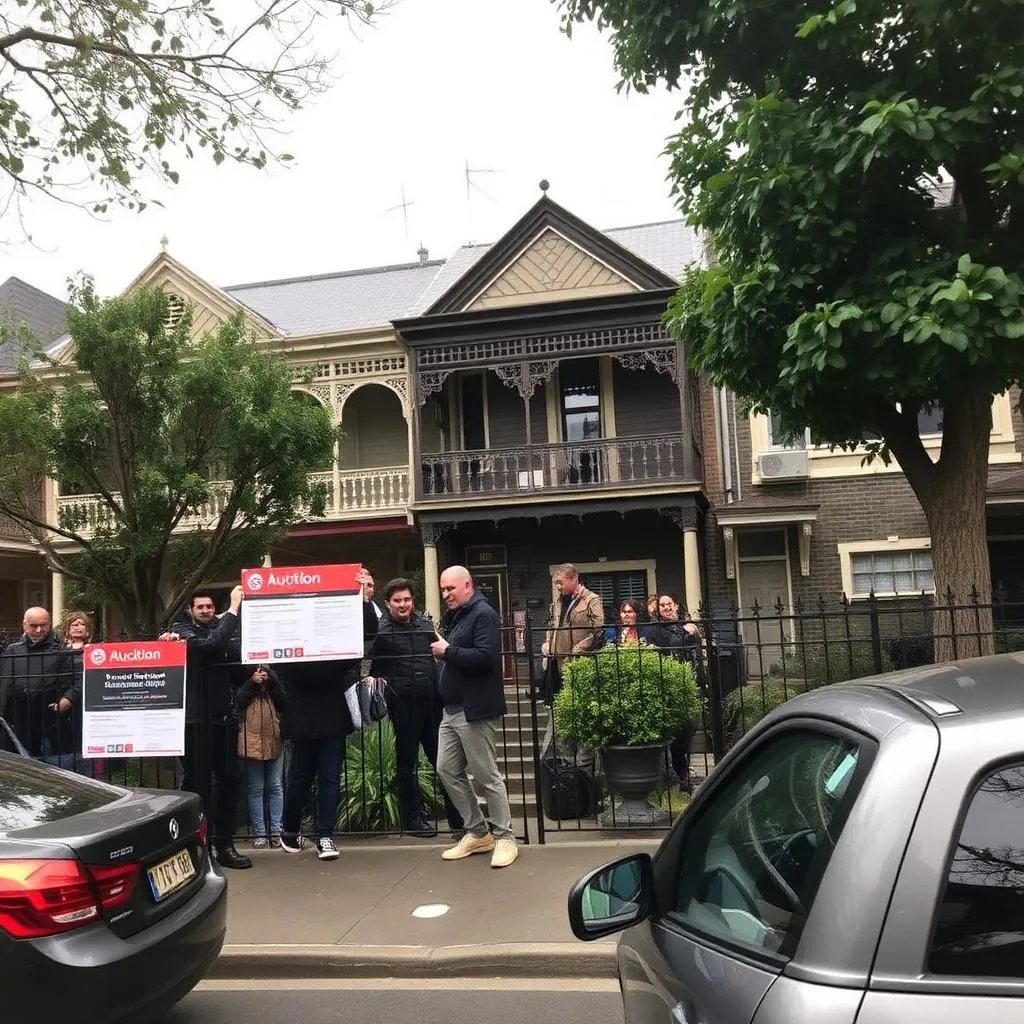
Under section 66S of the Conveyancing Act 1919 (NSW), the 5-business-day cooling-off period does not apply to sales by public auction. It also does not apply to properties bought within 24 hours before or 24 hours after an auction — the so-called 'auction window' exemption. In practice this means that once you register to bid, the leverage of cooling-off is gone.
This changes the economics of due diligence completely. In a private-treaty purchase, you have five business days to arrange, receive and act on an inspection report. In an auction, you must have all of that finished before you sit down to bid. That is a smaller window, and it costs more — because you may pay for inspections on properties you don't win — but the alternative is bidding blind on the largest transaction of your life.
The pre-auction inspection timeline
Two weeks out: register your interest with the agent, request the contract of sale, and identify the top 2-3 properties you actually intend to bid on. Do not inspect every property you casually attended — inspect the ones where you are seriously prepared to move.
One week out: book the inspection. Reputable Sydney inspectors are usually booked 3-7 days ahead, especially for weekend auctions. Book Monday for a Saturday auction.
3-4 days out: attend the inspection with the inspector if possible, or take the debrief call afterwards. Ask specifically about repair cost bands for the top three findings — this is the number you need at auction.
1-2 days out: use the report to set your bidding ceiling. If the report shows $28,000 of remediation, your maximum bid on this property is $28,000 lower than an equivalent defect-free property. That is the entire commercial function of the inspection.
The pre-purchase inspection timeline
Day 0 (offer accepted): your solicitor confirms exchange with a 5-business-day cooling-off. Book the inspection immediately — do not wait until day 2. Sydney inspectors' next-available slot is usually 24-48 hours away.
Day 1-2: inspection attends. Report is delivered inside 24 hours. Debrief call with the inspector.
Day 3: decisions. If the report is clean, proceed. If material defects are found, three options: (a) renegotiate the price down by the estimated remediation cost, (b) request a specialist follow-up report (structural engineer, licensed plumber, electrician) and extend cooling-off, or (c) rescind the contract inside the cooling-off window and forfeit the 0.25% cooling-off deposit — cheap tuition compared to buying a defective house.
Day 4-5: complete negotiations or serve rescission notice through your solicitor. Cooling-off ends 5pm on the fifth business day.
The 'do I inspect every property I bid on' question
Yes, if you are seriously bidding. No, if you are casually interested. The commercial rule is simple: an inspection costs $450-$650. Buying a property with $40,000 of hidden defects costs $40,000. If you would be prepared to actually bid your genuine ceiling on this property, you can afford the inspection cost. If you would not, don't inspect and don't bid.
Serious Sydney bidders typically spend $1,000-$2,000 across 3-4 inspections before they win one. That is a rational cost of doing business at the auction end of the market. Buyers who resist that cost tend to be the buyers who eventually 'win' an auction on the property nobody else wanted, for reasons the other bidders discovered in their reports.
Reading a vendor-supplied auction report
It is now common in Sydney for vendors to attach a pre-listing building and pest report to the auction contract. You should read it — but not rely on it as your only due diligence.
A vendor-commissioned inspector owes their professional duty to the vendor, not to you. The scope may have deliberately excluded high-risk zones. The report may be six months old, during which time slow leaks and termite activity have progressed. And critically, if the report is wrong, your legal recourse against a report you did not commission is materially weaker.
The sensible use of a vendor report is as a supplementary document your independent inspector reviews. They can then focus their on-site time on the exact areas the vendor report qualified, excluded or downplayed. That is often the highest-value use of a repeat inspection fee.
Related on Pest & Building Inspections Australia

The three defects most likely to change your auction ceiling
Termite damage or high-risk conducive conditions. A property with active termites is not one you renegotiate — it is one you walk away from, or bid on with a ceiling reduced by $25,000-$60,000 to cover treatment, remediation and lender risk.
Structural movement — differential footing settlement, wall cracking above 5mm, floor slope over 20mm/m. Repair costs range from $15,000 for underpinning a corner to $80,000+ for full underpinning. This is the single most expensive category of defect and the one most commonly missed by inexperienced inspectors.
Roof and waterproofing failure. Failed shower waterproofing membranes, corroded gutters, and end-of-life roofs are 'certain future costs'. A $12,000-$25,000 roof replacement inside two years is exactly the kind of number that should reset your bidding ceiling.
How to use the report at auction
Set two numbers before you walk in: your 'walk-away' ceiling (the price above which the property is bad value even in a clean condition) and your 'defect adjustment' (the sum of the material remediation numbers in the report). Your effective ceiling is the walk-away number minus the defect adjustment.
Write both numbers down. Give them to whoever is bidding on your behalf if it is not you. Auction rooms are designed to produce emotional decisions — the report is your discipline against that.
If the property sells above your effective ceiling, you have not 'lost' — you have avoided overpaying. Losing an auction on a defective property at a premium price is the correct outcome. Almost every experienced Sydney buyer has done exactly that at least twice on the way to the property they now own.
How to use the report inside cooling-off
In a private-treaty purchase, the report has three legitimate uses: (1) confirm the property is fundamentally sound and proceed, (2) renegotiate the purchase price down by the estimated remediation cost, (3) rescind and walk away.
The negotiation move is straightforward and works. Your solicitor writes to the vendor's solicitor with the report attached and a proposed price reduction. In our booking data, roughly 40% of Sydney pre-purchase inspections lead to a price renegotiation of $5,000 or more. The median negotiated reduction is $12,000. That is 20-25x the cost of the inspection.
If the vendor refuses to negotiate on genuinely material findings, that is itself information. Serve rescission through your solicitor before 5pm on the fifth business day. You lose 0.25% of the purchase price as the cooling-off deposit. That is cheap tuition compared to buying a $28,000 problem.
The bottom line
Pre-auction inspections cost more in aggregate because you may pay for inspections on properties you don't win. Pre-purchase inspections cost less because you only inspect one property. Both are cheaper than buying blind. In Sydney's current market, the difference between buyers who build wealth through property and buyers who lose to it is very often the discipline of never bidding, and never exchanging, without a report in hand.
Book the right inspection for the sale type. Read it. Take the debrief call. Then decide.
Explore our core inspection services & Sydney regions
Jump straight to the pillar page that matches your situation — every guide, service and suburb page on Pest & Building Inspections Australia connects back to these.
CORE INSPECTION SERVICES
- Building inspection cost Sydney (2026 pricing)
Transparent 2026 price ranges + instant fixed-quote cost calculator.
- Combined building & pest inspections in Sydney
Structural + timber-pest in one visit, AS 4349.1 & 4349.3.
- Pre-purchase building inspections
Cooling-off ready reports — same day where possible.
- Termite & timber-pest inspections
Thermal + moisture-metered checks across every Sydney postcode.
- New-build & handover inspections
PCI, handover and staged inspections for new Sydney homes.
SYDNEY REGIONS WE COVER
POPULAR SUBURB INSPECTION PAGES
- Building Inspections Sydney CBDSydney Metro
- Building Inspections ParramattaWestern Sydney
- Building Inspections PenrithWestern Sydney
- Building Inspections LiverpoolWestern Sydney
- Building Inspections BlacktownWestern Sydney
- Building Inspections ChatswoodNorth Shore
- Building Inspections North SydneyNorth Shore
- Building Inspections BondiEastern Suburbs
- Building Inspections ManlyNorthern Beaches
- Building Inspections Castle HillHills District
- Building Inspections CronullaSutherland Shire
- Building Inspections CampbelltownWestern Sydney
Frequently asked questions
How quickly can you inspect a property in Sydney?+
In most cases we can attend within 24–48 hours of booking, with same-day inspections often available across Sydney metro when arranged by 10am.
Are you independent?+
Yes. Pest & Building Inspections Australia operates independently — our reports are evidence-based and written to give you a clear, impartial picture of the property so you can make a confident decision.
Do you follow Australian Standards?+
Every inspection is carried out to AS 4349.1 (building) and AS 4349.3 (timber pests). All inspectors are fully licensed, insured and carry $20M professional indemnity cover.
Book your pre-auction inspection this week
Booking takes under a minute. Reports within 48 hours where possible.
Fixed price in 60 seconds · Reports within 48 hours · Fully independent