Mould and Moisture in Sydney Homes: Sources, Health, Remediation
Fix the moisture source and the mould stops coming back.
 Written by Rod Ismail, Principal Building & Pest InspectorReviewed by Rod Ismail 11 min readPublished 1 July 2026 · Last verified 1 July 2026
Roughly 1 in 3 Sydney homes has visible mould, and 1 in 8 has elevated moisture in an interior wall cavity that hasn't yet produced surface mould. Here are the seven common Sydney moisture sources and the remediation approach that actually works.
Why Sydney homes are prone to mould
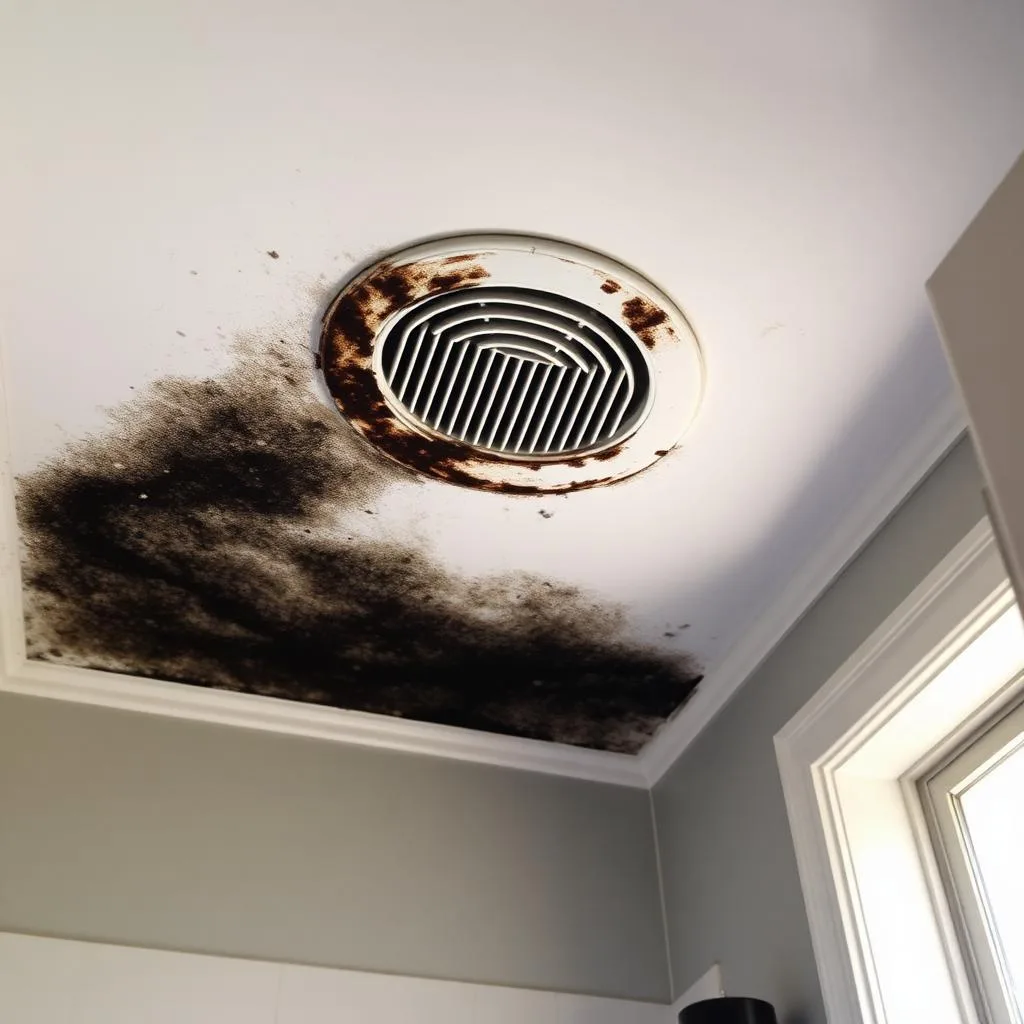
Sydney's climate is the perfect mould environment: warm humid summers, mild wet winters, and a housing stock that includes hundreds of thousands of homes built before modern ventilation standards. Add unvented bathroom exhausts, evaporative cooling condensate lines discharging into wall cavities, blocked weep holes, failed downpipes, and rising damp through original slabs, and mould becomes a predictable outcome rather than a surprise.
In our inspection data, roughly 1 in 3 Sydney homes has visible mould in at least one location, and roughly 1 in 8 has moisture readings elevated enough in an interior wall cavity to indicate ongoing water ingress that has not yet produced visible surface mould. The visible-mould finding is the tip of the iceberg; the moisture-meter finding is the more useful diagnostic.
The seven Sydney moisture sources
1. Bathroom exhaust fans discharging into ceiling cavity instead of to atmosphere. Steam accumulates above the ceiling, wets timber, then drips back into the plaster. Very common in Sydney apartments and pre-2000 houses.
2. Failed shower waterproofing. Discussed in the common-defects guide. Moisture tracks through wall cavity to the room next door.
3. Blocked or missing weep holes on brick veneer. Cavity moisture cannot drain, saturates bottom plate and lower wall, produces rising-damp appearance internally.
4. Downpipes discharging within 300mm of the slab. Saturates soil directly against footing, driving moisture into cavity.
5. Air-conditioner condensate lines terminating inside wall cavity. Ducted system condensate lines are a top-five moisture source in Sydney apartments — 5-15 litres per cooling day, discharged into the wrong place.
6. Rising damp through original slab or footings, especially in pre-war brick homes without a functional damp-proof course.
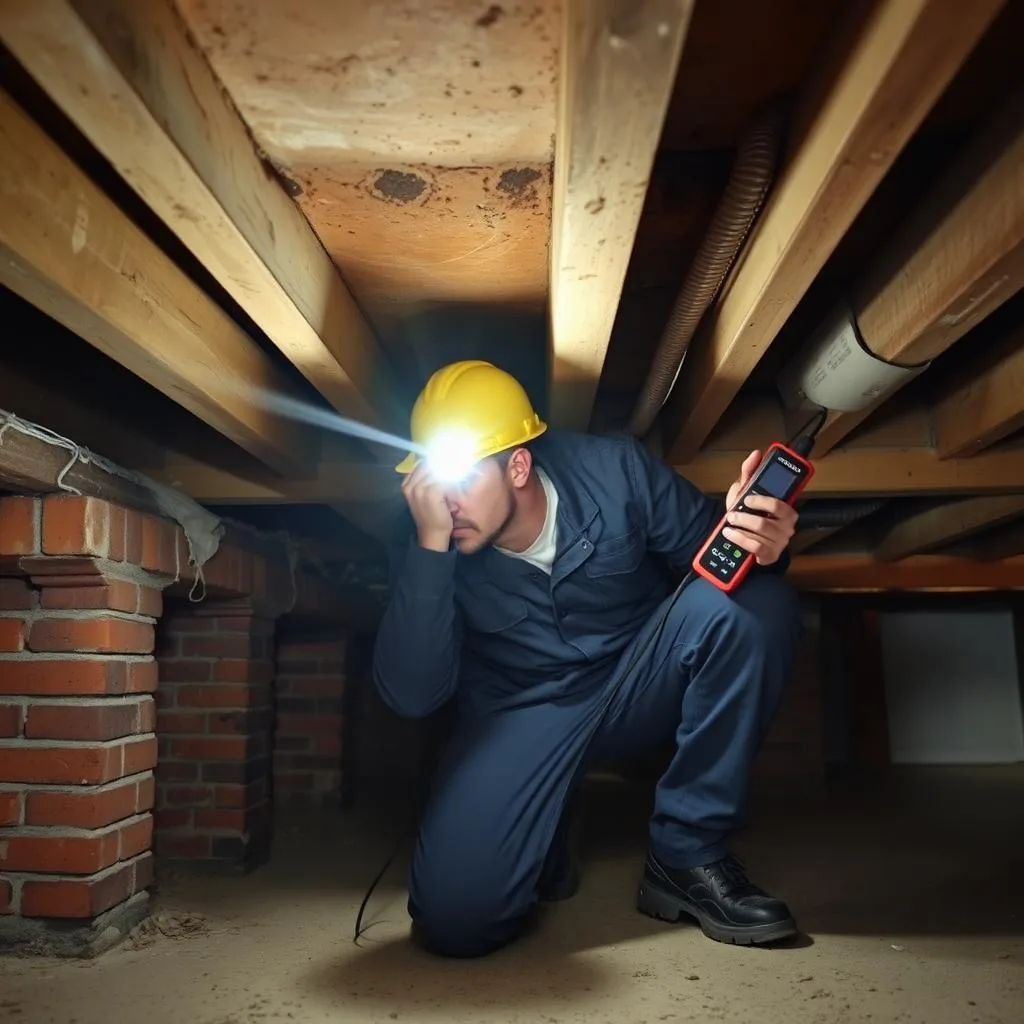
7. Sub-floor damp — ventilation grilles blocked by landscaping, garden bed level built up above sub-floor vents, no cross-flow ventilation.
How the inspector actually finds moisture
The three tools are a non-invasive moisture meter (measures moisture content of walls, ceilings and floors), a pin-type moisture meter (for direct timber readings in sub-floor and roof void), and a thermal-imaging camera (identifies temperature differentials indicating hidden moisture behind linings).
Thermal imaging is not X-ray vision. It reveals surface-temperature differences that correlate with hidden moisture, insulation gaps, framing behind plaster, and studs. An experienced inspector uses thermal imaging to identify suspect areas, then confirms with the moisture meter. Anyone selling thermal imaging as a stand-alone 'see through walls' service is oversimplifying and often overpromising.
A well-conducted moisture assessment during a pre-purchase inspection takes 20-40 minutes across a standard house, generates 15-30 numbered readings recorded in the report, and directly informs the waterproofing findings.
The health question
Visible mould in a residential property produces spores. Some people are highly sensitive to those spores (asthmatics, immunocompromised individuals, allergic responders); many others are not. The scientific literature does not support the popular narrative that all mould is 'toxic' — but it strongly supports the position that persistent indoor mould, at scale, degrades indoor air quality and is a legitimate reason to remediate.
The practical decision rule: any visible mould larger than roughly a dinner plate, or persistent mould that returns within weeks of cleaning, should be remediated professionally and — critically — the underlying moisture source must be fixed at the same time. Wiping mould off a wall without addressing the leak that grew it is a repeat-visit business model.
Remediation options and cost bands
DIY surface cleaning (small isolated areas, non-toxic surface only): $30-$80 in cleaning products and a Saturday afternoon. Suitable only for surface mould on tile grout, bathroom silicone, or window seals.
Professional mould remediation (single room, containment, HEPA filtration, biocide treatment): $850-$2,200 per room. Suitable for larger visible mould, contamination in soft furnishings, or where an occupant has documented health sensitivity.
Structural mould remediation (mould inside wall cavities, subfloor, or where drywall must be removed): $3,500-$9,000 per zone.
Underlying moisture-source repair: variable. Vent an exhaust fan to atmosphere: $450-$850. Redirect condensate line: $250-$500. Clear and unblock weep holes: $180-$450. Redirect downpipes: $250-$650 per downpipe. Repair failed shower waterproofing: $6,500-$14,000. The moisture-source repair is almost always more valuable than the mould cleanup — because it is the moisture source that will cause the next mould finding.
Sub-floor moisture — the unglamorous priority
Sub-floor moisture is the single most under-appreciated issue in Sydney housing. It affects roughly 40% of pre-1990 timber-floored homes we inspect. Symptoms: musty odour on ground floor, elevated moisture readings in floor coverings, softness in floorboards near external walls, and — in the sub-floor itself — dark staining on bearers and joists, fungal decay, and (frequently) live termite conducive conditions.
The fix is almost always a combination of: adding or unblocking sub-floor ventilation grilles, installing mechanical sub-floor extract fans on humidity-controlled timers, redirecting downpipes away from the perimeter, and grading landscaping away from the building. Total cost package: $2,500-$6,500. Payback in preserved sub-floor timber, reduced termite risk, and reduced indoor moisture: dramatic.
Related on Pest & Building Inspections Australia
The Sydney apartment version — condensation not leaks
Modern high-rise apartments have a different moisture problem: not leaks, but condensation. Sealed windows, heavily-insulated envelopes, minimal ventilation, and internal moisture loads (cooking, showering, drying laundry indoors) produce dew-point conditions on cold glass and cold external walls. Mould appears in the top corners of external walls and on window reveals.
The fix is behavioural more than structural: run bathroom exhaust fans for 20+ minutes after showering, avoid drying laundry indoors, use a dehumidifier or air-conditioner dehumidify cycle in winter, and open windows for 10-15 minutes per day even in cold weather. In more extreme cases, a mechanical whole-of-apartment ventilation system (heat-recovery ventilator, or HRV) is worth considering.
The report language you should look for
A well-written Sydney moisture / mould section in a pre-purchase report should include: specific rooms and elevations with elevated readings, moisture-meter reading values in each location (percentage moisture or reference scale), suspected source (with candidate sources ranked by likelihood), and a recommended action with rough cost band.
A report that says only 'moisture staining observed in laundry ceiling — recommend investigation' is not useful. A report that says 'moisture staining observed on laundry ceiling in the north-east corner, 22% MC reading vs 12% baseline, most likely source: failed shower waterproofing in ensuite directly above; recommend removal of shower base and full wet-area rectification, indicative cost $8,500-$12,500' is genuinely useful. Aim for the second.
Renting or buying with existing mould
For tenants, mould that pre-dates your tenancy or arises from building defects (not from your behaviour) is a landlord repair obligation under the Residential Tenancies Act 2010 (NSW). Serve written notice, keep photographs, and if the landlord fails to remediate, apply to NCAT.
For buyers, existing mould in a property under contract is a legitimate cooling-off negotiation lever. Where the mould reflects a structural or waterproofing issue, the underlying repair — not the mould cleanup — is the price-reduction number.
Final word
Sydney's climate and housing stock will always produce moisture and mould. Well-managed properties keep it under control through boring, unglamorous maintenance: exhaust fans that actually vent to atmosphere, downpipes that discharge to stormwater, gutters that don't overflow, weep holes that aren't buried under mulch, and shower waterproofing that gets renewed at end of life instead of ignored.
Book the inspection. Read the moisture section. Fix the sources. That is the whole discipline.
Explore our core inspection services & Sydney regions
Jump straight to the pillar page that matches your situation — every guide, service and suburb page on Pest & Building Inspections Australia connects back to these.
CORE INSPECTION SERVICES
- Building inspection cost Sydney (2026 pricing)
Transparent 2026 price ranges + instant fixed-quote cost calculator.
- Combined building & pest inspections in Sydney
Structural + timber-pest in one visit, AS 4349.1 & 4349.3.
- Pre-purchase building inspections
Cooling-off ready reports — same day where possible.
- Termite & timber-pest inspections
Thermal + moisture-metered checks across every Sydney postcode.
- New-build & handover inspections
PCI, handover and staged inspections for new Sydney homes.
SYDNEY REGIONS WE COVER
POPULAR SUBURB INSPECTION PAGES
- Building Inspections Sydney CBDSydney Metro
- Building Inspections ParramattaWestern Sydney
- Building Inspections PenrithWestern Sydney
- Building Inspections LiverpoolWestern Sydney
- Building Inspections BlacktownWestern Sydney
- Building Inspections ChatswoodNorth Shore
- Building Inspections North SydneyNorth Shore
- Building Inspections BondiEastern Suburbs
- Building Inspections ManlyNorthern Beaches
- Building Inspections Castle HillHills District
- Building Inspections CronullaSutherland Shire
- Building Inspections CampbelltownWestern Sydney
Frequently asked questions
How quickly can you inspect a property in Sydney?+
In most cases we can attend within 24–48 hours of booking, with same-day inspections often available across Sydney metro when arranged by 10am.
Are you independent?+
Yes. Pest & Building Inspections Australia operates independently — our reports are evidence-based and written to give you a clear, impartial picture of the property so you can make a confident decision.
Do you follow Australian Standards?+
Every inspection is carried out to AS 4349.1 (building) and AS 4349.3 (timber pests). All inspectors are fully licensed, insured and carry $20M professional indemnity cover.
Book a moisture & mould inspection
Booking takes under a minute. Reports within 48 hours where possible.
Fixed price in 60 seconds · Reports within 48 hours · Fully independent