
Dilapidation Reports Explained: When You Need One in Sydney
The $600 spend that prevents a $60,000 argument.
 Written by Rod Ismail, Principal Building & Pest InspectorReviewed by Rod Ismail 10 min readPublished 1 July 2026 · Last verified 1 July 2026
A dilapidation report documents the pre-existing condition of your property before neighbouring construction begins. If cracks or damage appear later, the report is the evidence that settles the dispute quickly. Here's the full guide to scope, cost and timing.
What a dilapidation report is (and isn't)
A dilapidation report is a formal, photograph-heavy documentation of the pre-existing condition of a property, prepared at a specific date and time. It is not a defect report and does not make recommendations. It is a legal-quality snapshot: 'this is the state the property was in on this date, in this level of detail'.
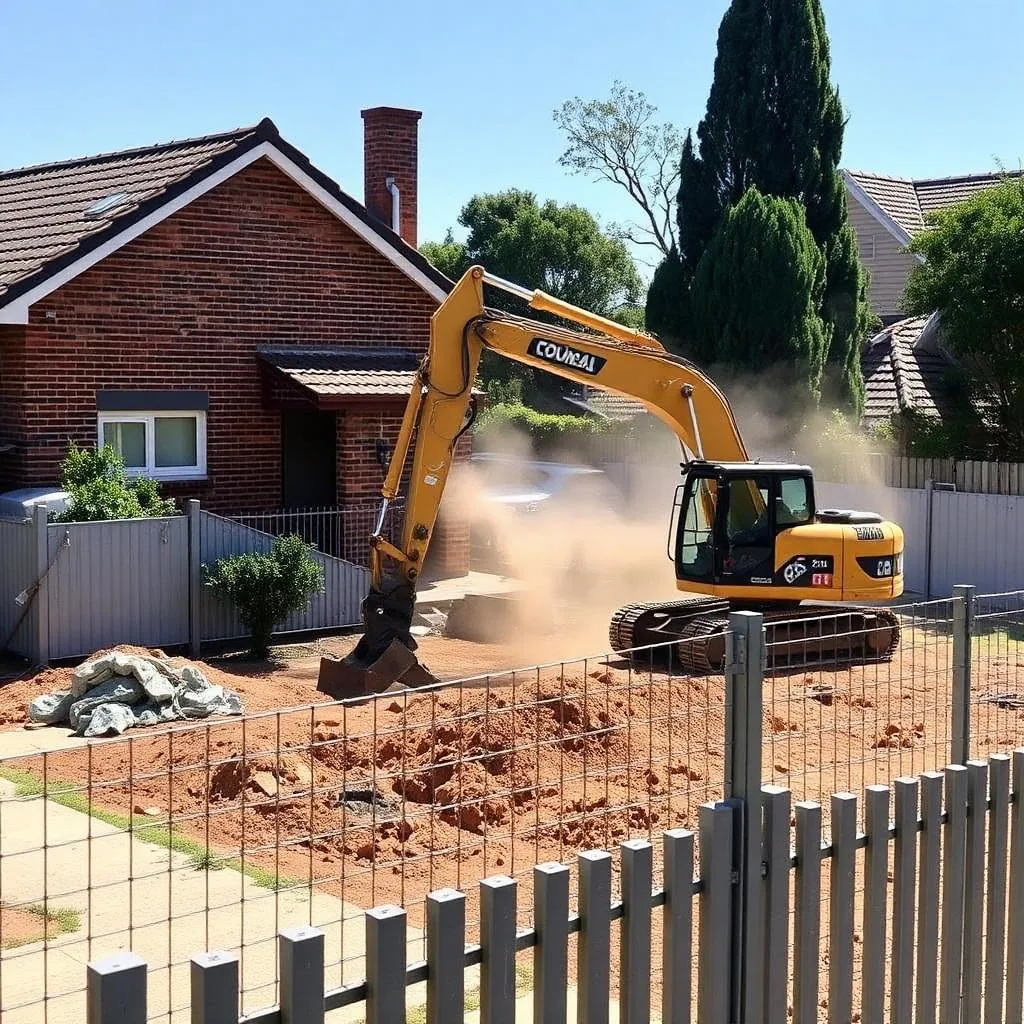
The purpose is dispute prevention. When a neighbouring property is about to undergo excavation, demolition, or heavy construction, the surrounding properties are at risk of vibration damage, cracking, settlement or dust ingress. A dilapidation report taken before the works establishes the baseline. A second dilapidation report taken after the works establishes what changed. Between the two, the argument about 'was that crack there before or did your excavator cause it' has an answer.
Who commissions a dilapidation report
Three common triggers in Sydney: (1) a developer or head contractor about to commence work commissions dilapidation reports on all neighbouring properties as part of their risk-management and construction management plan; (2) a neighbouring owner concerned about the works commissions their own dilapidation report so they retain independent evidence; (3) a council development consent condition specifically requires dilapidation reports before certain excavation or demolition works.
The best-practice pattern in Sydney urban development is for the developer to fund dilapidation reports on all directly-affected properties (typically the adjoining lots and the properties across the street) and to permit those owners to nominate their own independent inspector to conduct the work. That preserves independence while placing the cost with the party creating the risk.
What a good dilapidation report contains
Full external photographic coverage of every elevation of the neighbouring building, including boundary walls, fences, driveways, retaining walls, and any structures within 6-10 metres of the works.
Interior photographic coverage of every visible surface in the property, focused on plaster, cornices, tile and grout, wet-area substrates, brick and masonry, timber joinery, and any pre-existing crack patterns.
Close-up photographs of every existing crack, chip, stain, deflection or defect, each individually numbered and cross-referenced to a floor plan.
Crack width measurements at multiple points on each crack, to a marked millimetre scale.
Sub-floor and roof-void photography where accessible.
External hardstand photography — concrete paths, driveways, tiling, pool coping, retaining walls.
A statement of the inspection scope, the date and time, the inspector's licence details, and the report's evidentiary purpose.
Why photograph density matters
The value of a dilapidation report is entirely in the density and specificity of the photographs. A 20-page report with 40 photos is materially less useful than a 90-page report with 300 photos. When a post-works dispute arises 8 months later, and the question is 'was that crack in the master bedroom cornice there before, and if so, how wide was it', the report either has that photo at that time with that scale on it, or it does not.
This is why dilapidation reports are longer, more expensive, and more mundane than pre-purchase reports. They are not analysis — they are evidence.
Cost bands in Sydney
Standard single dwelling dilapidation report, exterior + interior + hardstand: $440-$650. Larger property (400m²+): $650-$950. Interior-only or exterior-only scope: $280-$450. Pre-works and post-works comparison package: $780-$1,200.
Commercial properties, industrial sites and heritage buildings sit above these bands and are quoted case-by-case, usually with per-elevation and per-room rates.
When to book — timing is legally important
Book the dilapidation report between 6 weeks and 2 weeks before construction commences on the neighbouring site. Booking earlier is fine but creates a longer gap during which unrelated damage could occur (a storm, an unrelated household incident) that would then need to be disentangled from construction impact.
Book the post-works report within 2-4 weeks of works completion, before demolition of hoardings and site remediation. The clearer the temporal link, the stronger the evidence.
A gap of more than 6 months between the pre-works report and construction commencement, or between construction completion and the post-works report, materially weakens the evidentiary value.
Related on Pest & Building Inspections Australia
What happens if damage is found in the post-works report
The typical dispute pathway in Sydney is: (1) written notice to the developer or head contractor with both reports and the differential findings attached; (2) negotiation directly, often with the developer's construction management insurer; (3) mediation through a service like the Community Justice Centre; (4) civil proceedings in the Local Court or NSW Supreme Court, depending on quantum.
In our experience, roughly 70% of dilapidation-based disputes settle at stage 2 (direct negotiation), because the two reports provide such specific evidence that neither party wants to litigate. This is the entire commercial function of the dilapidation report — it prevents disputes by making them un-winnable for the party in the wrong.
Common Sydney scenarios
Basement excavation on a neighbouring block. Vibration and dewatering during basement construction is the highest-risk activity for cracking, subsidence and retaining-wall damage on adjacent properties. Any Sydney owner adjacent to a basement excavation should insist on dilapidation reports.
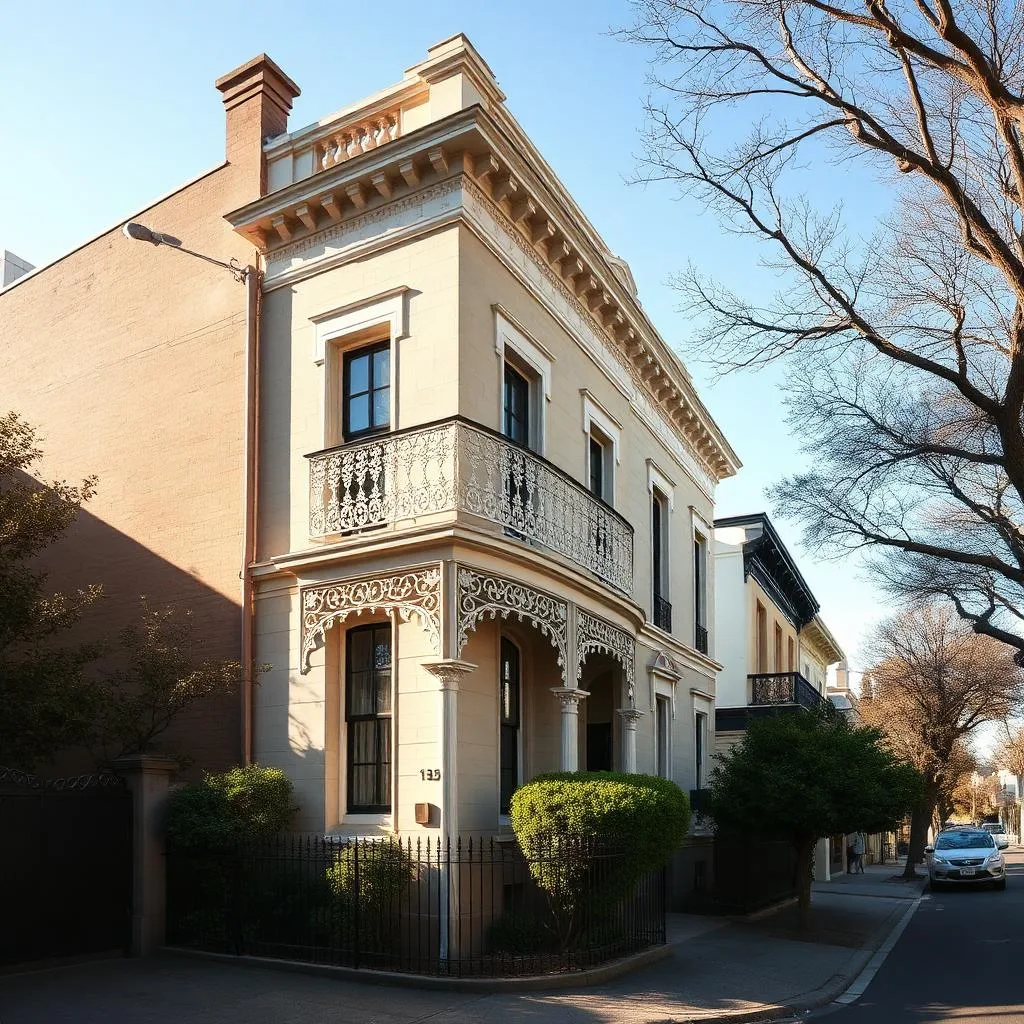
Terrace and townhouse party-wall works. In inner-Sydney suburbs (Newtown, Paddington, Balmain), party-wall works during a neighbour's renovation regularly cause cornice and plaster cracking. Interior-focused dilapidation reports on the shared-wall side are the norm.
Duplex and knockdown-rebuild on adjacent lot. The full package: exterior + interior + hardstand + boundary fencing + swimming pool coping.
Council road, drainage or utility works. Government-funded infrastructure works are one of the few situations where the developer will actively fund the surrounding dilapidation reports as a matter of standard process.
The overlooked bit — fences, pools, driveways
The most-disputed items in post-works claims are frequently not the building itself but the hardstand: driveway cracks, pool coping displacement, fence lean, and retaining-wall movement. These items are far more sensitive to vibration than the main building structure.
A dilapidation report that skips or under-documents the hardstand and boundary structures is functionally incomplete for the way real Sydney disputes actually play out. Ask specifically for hardstand and boundary coverage before booking.
Final word
A dilapidation report is a document that ideally is never used. Its value is preventive: it makes disputes cheap to resolve, or unnecessary in the first place. That is why councils increasingly require them as a condition of consent, and why professional Sydney developers commission them as a matter of course.
If you live adjacent to a site about to break ground, do not wait for the developer to offer you a report. Commission your own. The $600 spend is trivial compared to the cost of arguing later about which cracks were there first.
Explore our core inspection services & Sydney regions
Jump straight to the pillar page that matches your situation — every guide, service and suburb page on Pest & Building Inspections Australia connects back to these.
CORE INSPECTION SERVICES
- Building inspection cost Sydney (2026 pricing)
Transparent 2026 price ranges + instant fixed-quote cost calculator.
- Combined building & pest inspections in Sydney
Structural + timber-pest in one visit, AS 4349.1 & 4349.3.
- Pre-purchase building inspections
Cooling-off ready reports — same day where possible.
- Termite & timber-pest inspections
Thermal + moisture-metered checks across every Sydney postcode.
- New-build & handover inspections
PCI, handover and staged inspections for new Sydney homes.
SYDNEY REGIONS WE COVER
POPULAR SUBURB INSPECTION PAGES
- Building Inspections Sydney CBDSydney Metro
- Building Inspections ParramattaWestern Sydney
- Building Inspections PenrithWestern Sydney
- Building Inspections LiverpoolWestern Sydney
- Building Inspections BlacktownWestern Sydney
- Building Inspections ChatswoodNorth Shore
- Building Inspections North SydneyNorth Shore
- Building Inspections BondiEastern Suburbs
- Building Inspections ManlyNorthern Beaches
- Building Inspections Castle HillHills District
- Building Inspections CronullaSutherland Shire
- Building Inspections CampbelltownWestern Sydney
Frequently asked questions
How quickly can you inspect a property in Sydney?+
In most cases we can attend within 24–48 hours of booking, with same-day inspections often available across Sydney metro when arranged by 10am.
Are you independent?+
Yes. Pest & Building Inspections Australia operates independently — our reports are evidence-based and written to give you a clear, impartial picture of the property so you can make a confident decision.
Do you follow Australian Standards?+
Every inspection is carried out to AS 4349.1 (building) and AS 4349.3 (timber pests). All inspectors are fully licensed, insured and carry $20M professional indemnity cover.
Book your pre-works dilapidation report
Booking takes under a minute. Reports within 48 hours where possible.
Fixed price in 60 seconds · Reports within 48 hours · Fully independent